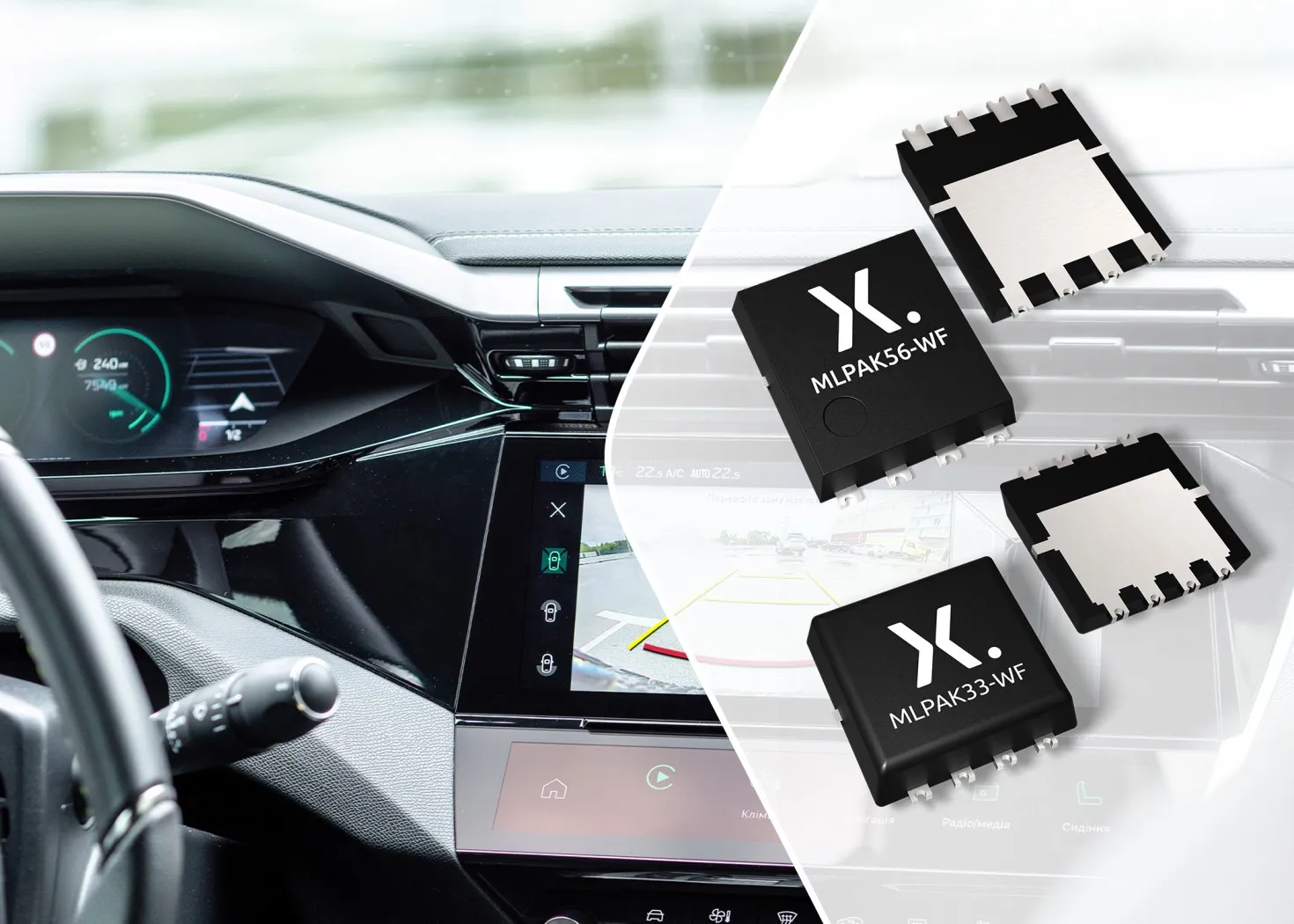
 Nexperia has added 19 new MOSFETs to its portfolio, bringing 40–100 V devices to the MLPAK33-WF footprint and introducing its first 40 V option in the larger MLPAK56-WF. Both use wettable flanks (-WF) to support automated optical inspection, a feature now common in automotive production lines.
Why This Matters for Automotive Engineers
As vehicles shift from dozens of small ECUs to fewer, more powerful domain and zonal controllers, there’s a push to shrink power stages without compromising thermal performance. MOSFETs in MLPAK help do exactly that — giving designers a way to fit switching elements for body control, lighting, and reverse battery protection into tighter spaces while keeping junction temperatures under control.
Compared with traditional DPAK or LFPAK options, the MLPAK format uses less board space while still offering solid electrical and thermal performance. That makes it easier to lay out high-density automotive boards where every millimetre counts.
Design Flexibility and Reliability
The range offers multiple RDS(on) values, so engineers can select the current rating they need without changing the package footprint. Avalanche ruggedness is high enough that in many cases a freewheeling diode or snubber can be left out, cutting component count and cost.
Low ringing and fast switching behaviour also help maintain power efficiency, a key factor as automakers work to keep heat generation down in compact control units.
Part of a Larger Roadmap
This launch is the first step in Nexperia’s plan to expand its MLPAK offering. The goal is to make scalable, automotive-grade MOSFET solutions available in compact packages with consistent quality and supply stability, supporting long vehicle production lifecycles.
Learn more and read the original article on www.nexperia.com
You may also like