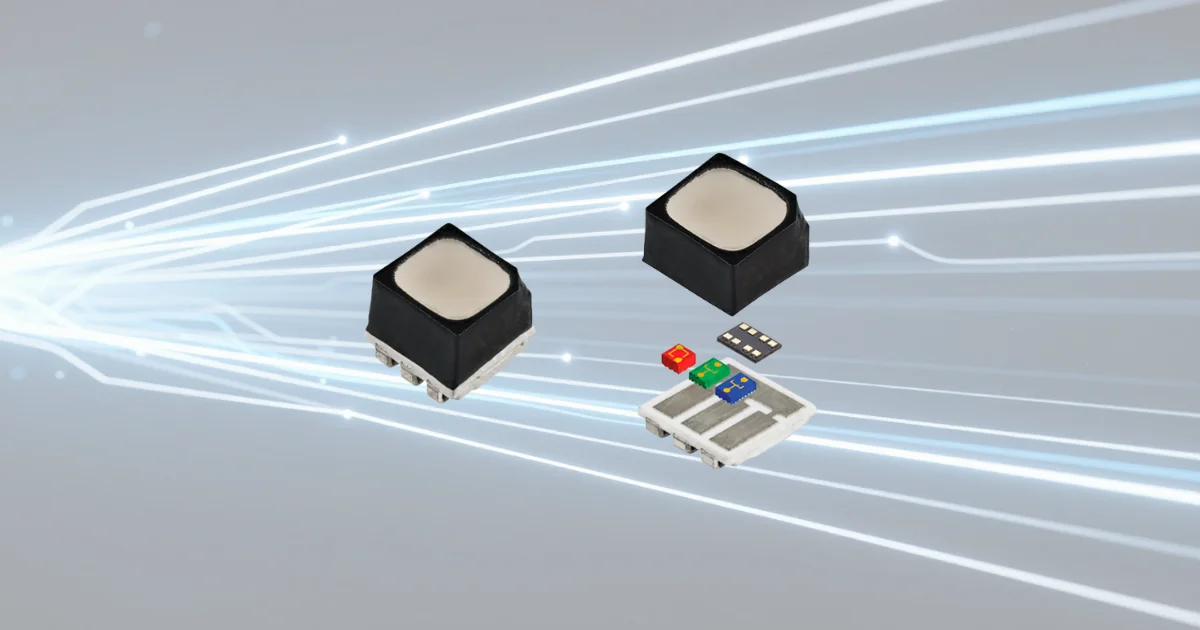
 When engineers evaluate next generation display hardware, a recurring challenge is how to balance pixel density with reliable drive control. External driver ICs add wiring complexity, generate thermal hotspots and introduce synchronization issues that become more noticeable as refresh rates climb. This is one of the reasons interest has grown around approaches that shift more decision making into the pixel itself. The OptiLamp LEDs from Cree LED move firmly in this direction by placing intelligence inside each LED package, giving designers a different way to approach visual performance and system architecture.
Pixel-Level Intelligence That Changes Display Behavior
A key detail in this platform is that each OptiLamp device handles its own output management. Instead of relying on multiplexed drive chains, the pixel determines how to maintain brightness, color integrity and temporal stability. In practice, this removes several of the artifacts that show up when displays operate under traditional scan arrangements. Image tearing, inconsistent transitions and visible scan line patterns are reduced because every pixel regulates itself with true 1 to 1 scan behavior. A common challenge in dense video walls is maintaining color smoothness when transitions occur across channels. With 24 bit control per channel, these LEDs produce very fine gradations, keeping shadows clean and highlights stable across both live viewing and on camera conditions.
Electrical Behavior That Supports Smoother Visual Output
Driving each pixel internally reshapes electrical flow through the panel. Traditional architectures route currents through shared paths that vary as content changes. OptiLamp devices reduce the load variation by keeping current decisions local. This matters because voltage drops and transient swings tend to accumulate across large arrays, and they can shift white balance or reveal unintended flicker. One detail worth noting is that localized management also changes the way heat is distributed. Instead of creating driver clusters that run significantly warmer, thermal output becomes more uniform, which can help extend long term reliability for indoor and outdoor deployments. Power consumption also benefits from this arrangement. At typical brightness levels, the devices hold visual clarity with lower input power, which reduces operating costs and supports energy sensitive projects.
System Integration That Simplifies Mechanical And Electrical Design
Moving control into the LED package has clear implications for the rest of the design. Engineers can reduce the number of external ICs, shorten routing paths and simplify power distribution networks. The result is a thinner and lighter assembly that requires fewer materials and offers fewer potential points of failure. In real systems, this reduces the number of parts that need maintenance during field service. Built in monitoring and calibration data provide another layer of practical support. Panels can self report degradation or drift, helping technicians respond before issues become visible to end users. For manufacturers, the approach offers a cleaner assembly process with fewer steps, and that can shorten production time while improving consistency.
A Shift Toward Distributed Intelligence In Visual Systems
There is a broader trend behind this technology. As display surfaces grow larger and expectations for image fidelity rise, distributing intelligence across the pixel field becomes more appealing. Centralized control architectures struggle to keep up with the precision required for professional content, broadcast environments and increasingly complex signage. OptiLamp LEDs point toward a future where displays behave more like coordinated sets of autonomous elements rather than passive light sources. For engineers, the takeaway is that this type of architecture may influence how next generation video walls, public information displays and specialty visualization systems are built, especially where reliability, uniformity and power efficiency drive long term decisions.
Learn more and read the original announcement at www.cree-led.com
You may also like