
The Ongoing RAM Crises
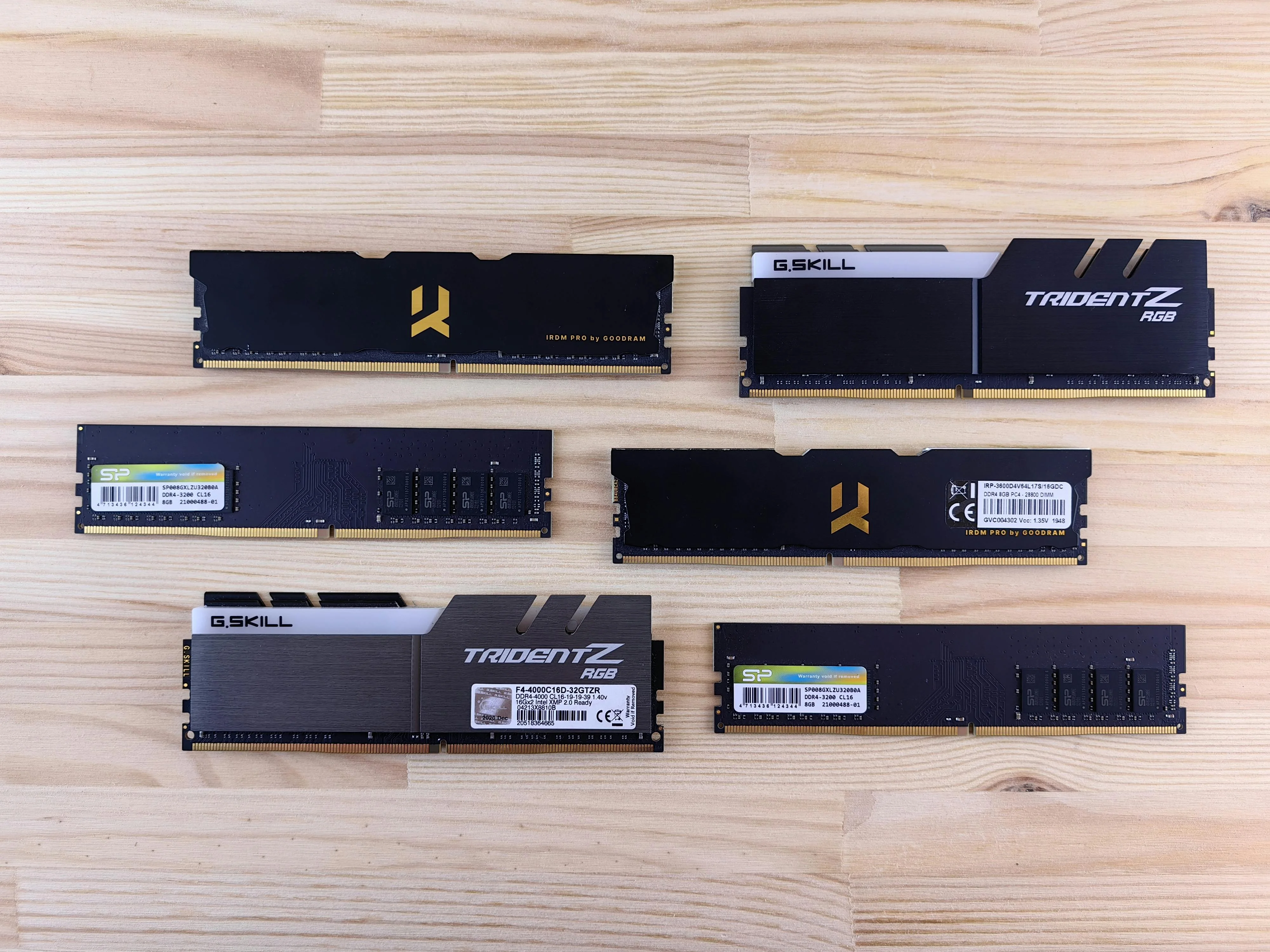
If you work with computers or electronics, you will be aware of the ongoing RAM crisis that seem to be getting worse by the day. A component that would typically be one of the cheaper parts of a PC build (next to the PSU), and certainly not the most expensive part in a server rack, is now so expensive that it can be difficult to get hands on even the cheapest RAM modules. But the reason for this is largely driven by AI demand, along with multiple factors that have all combined together. The first reason for the shortage comes from the sudden rush in datacentre construction. Large tech companies such as Google, Meta (Facebook), and Apple are in the process of creating next-generation datacentres aimed at training and running AI models. Combined with the sudden popularity of AI such as ChatGPT and Claude, these companies are rushing to obtain as much RAM as possible to help power their services. This rush is causing hardware manufacturers to also rush production of key components, and thus, is causing a strain on other industries. The second reason comes from how manufacturers are seeing the rising demand in memory, and thus shifting their attention towards AI systems. While this may provide more revenue for manufacturers, it also sees less focus on the consumer market, leading to shortages in consumer-oriented parts. The third reason comes from how manufacturers are shifting production away from lower-density, consumer-grade modules. Instead, manufacturers are focusing on producing higher-capacity, server-grade and AI-focused modules, and thus creating an environment where lower memory densities are becoming increasingly harder to find.
CXMT Steps In With New Memory Options
Amid the industry-wide shortage, major PC makers such as ASUS, Acer, Dell, and HP are turning to Chinese supplier CXMT as a potential alternative. At the 2025 China International Semiconductor Expo, CXMT unveiled DDR5-8000 and LPDDR5X-10667 modules. Their offerings include 12 Gb and 16 Gb LPDDR5X, and DDR5 modules up to 16 Gb and 24 Gb. The 16 Gb chips measure 67 mm² with a density of 0.239 Gb/mm², while the company’s G4 DRAM cells are 20 percent smaller than the previous G3 generation, built on a 16 nm node—roughly three years behind the leading global suppliers. CXMT’s modules meet, and in some cases exceed, JEDEC specifications, making them suitable for a range of PC OEM applications. Shipping has begun, though exact wafer output is unclear. While the production may primarily satisfy domestic Chinese demand, it has the potential to partially address shortages in the West caused by AI-driven consumption. For most consumers, availability and price outweigh concerns about the memory’s origin, showing that Chinese memory manufacturers are now credible participants in the global PC supply chain.
Could China fill the RAM gap?
Even though it is not exactly clear whether CXMT can plug the gap formed by the AI market, it does signal something very interesting; China has generally been very good at filling gaps in the tech market. Of course, this is not to say that China is the best nation for technological development, but it does seem to be more responsive to what markets and consumers want. For example, RISC-V is an open instruction-set architecture that originated in the early 2010s, initially supported by a smaller community of researchers and engineers. Chinese investment and adoption accelerated its development and deployment, and RISC-V is now being adopted by many companies globally as a viable option for custom processors alongside other efforts in the West. Another example is EVs; while the West has been trying to promote EVs over the past decade, China has aggressively scaled production, infrastructure, and adoption. China now leads the world in EV sales, manufacturing capacity, and battery production, and competes strongly internationally. Even all-in-one mini PCs and computers are being actively built in China, primarily because it turns out that the latest CPUs and RAM are not necessary for many everyday tasks (most of my hardware is pre-8th Gen Intel). So, if China can look at the situation with RAM and decide to step up to the plate, who knows what else they will do? Sure, their RAM chips may be a few years behind, but considering how the DDR5 specification was published in 2020 and implementations remain widely usable in modern systems, maybe the latest-tech RAM really isn’t that important. And as time progresses, the tech introduced by new chips may not be as groundbreaking as we thought. And when Intel or TSMC roll out ever-smaller process nodes, China can quietly work in the background producing processors and memory on slightly larger nodes that are perfectly usable for many applications, along with the other crucial tech the industry needs.
You may also like