 Engineers who work with machinery exposed to aggressive cleaning chemicals know that the interface hardware rarely fails in dramatic ways. It usually starts with a soft discoloration around the actuator or a slightly inconsistent click that only appears after a few cycles in colder conditions. Over time the corrosion creeps in and the switch that once felt predictable begins to feel vague. HMI parts that look simple from the outside end up carrying more responsibility than their size suggests, and this is where the updated Series 82 additions from EAO start to make sense because they lean into durability more than appearance.
Selector Behavior Shaped Around Corrosion and Wear
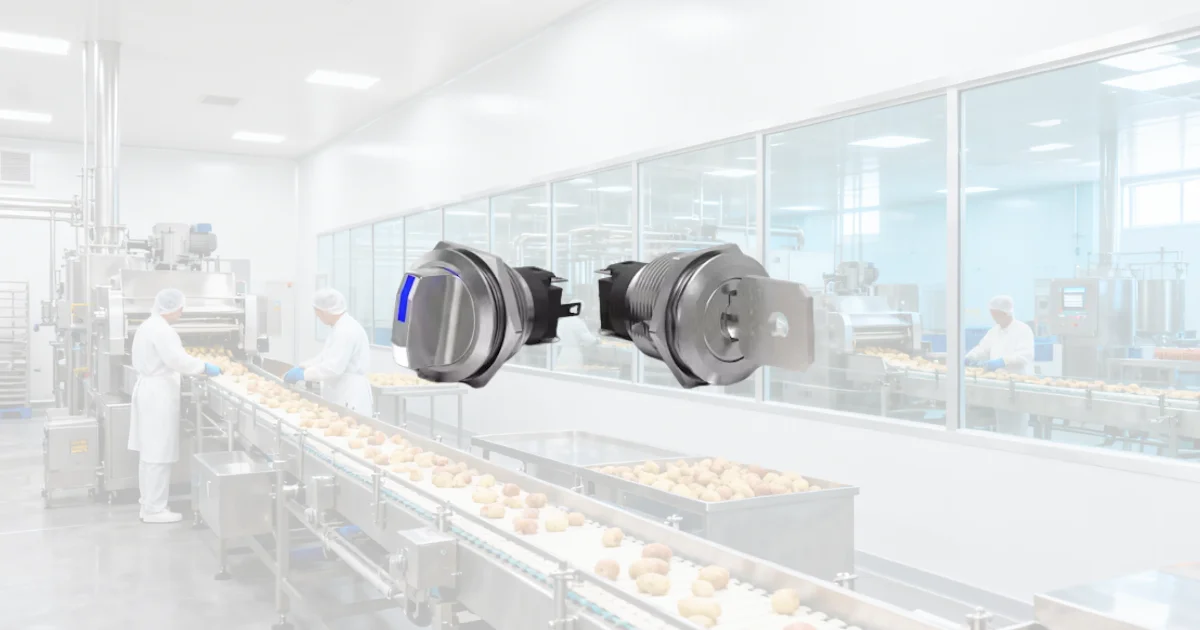
Selector switches do not usually get treated gently in industrial environments. The new illuminated selector option builds on the existing stainless steel design, but the bigger impact comes from how the housing and sealing approach resist alkaline cleaners that often attack cheaper assemblies. The visibility of the illuminated handle matters less as an aesthetic choice and more as a cue for operators who rely on a quick glance during a noisy shift where lighting is inconsistent. The tactile response has enough definition that repeated use does not blur the switching positions, which becomes important when operators move between steps without pausing to double check what the control is doing. You feel that the switch was built to remain readable and reliable long after the surface finish stops looking new.
Keylock Behavior That Restricts Access Without Hindering Workflows
Keylock switches tend to be installed in places where accidental activation is not an option. The updated Series 82 version keeps the mechanical feel firm enough that the operator notices the transition without needing to force a turn. The geometry and sealing choices help it stand up to contamination that usually creates sluggish rotation after months of exposure. It suits machines that run staggered shift patterns where only certain personnel can alter modes or trigger safety related paths. Access control becomes a physical action rather than a software concept, and the hardware holds up even when fitted into older enclosures that do not protect against ambient moisture or rapid temperature swings.
Integration Realities in Industrial HMIs
Space on control panels is rarely generous and it becomes even tighter when designers try to keep the layout intuitive for operators wearing gloves. The Series 82 geometry remains compact enough that you can cluster controls without making the panel feel cramped, and the consistency across the range reduces the need for mixed-component layouts. Harsh environments tend to reveal weaknesses slowly rather than instantly. A seal might harden, a handle might lose clarity, or a switch might drift in feel after repetitive cycles. These new variants appear biased toward longevity rather than novelty, which helps in plants where downtime is expensive and access to the panel is limited.
A Broader Architectural Shift in HMI Expectations
Industrial HMI hardware has been moving toward a point where aesthetics and longevity need to coexist because operators interact with equipment differently now. Control cabins, packaging lines, and food-processing areas run under cleaning regimes that are becoming harsher each year. Designers cannot rely on older assumptions about what a switch will survive. This expansion of the Series 82 family reflects that shift. It is not about adding new functions but expanding reliability boundaries so the hardware remains predictable even when the environment is not. The switches take on the role of maintaining stable interaction in places where a minor mechanical failure can ripple into larger operational issues.
Learn more and read the original announcement at www.eao.com
You may also like