 High voltage battery systems in electric vehicles tend to accumulate protection hardware over time. Contactor for normal switching. Fuse or pyrofuse for catastrophic events. Detection electronics watching current levels and deciding when something has gone wrong. It works, but the architecture grows complicated. The moment a short circuit occurs inside a battery pack, thousands of amps may try to flow through copper that was never meant to see that much current. At that point the protection system has only a fraction of a second to respond.
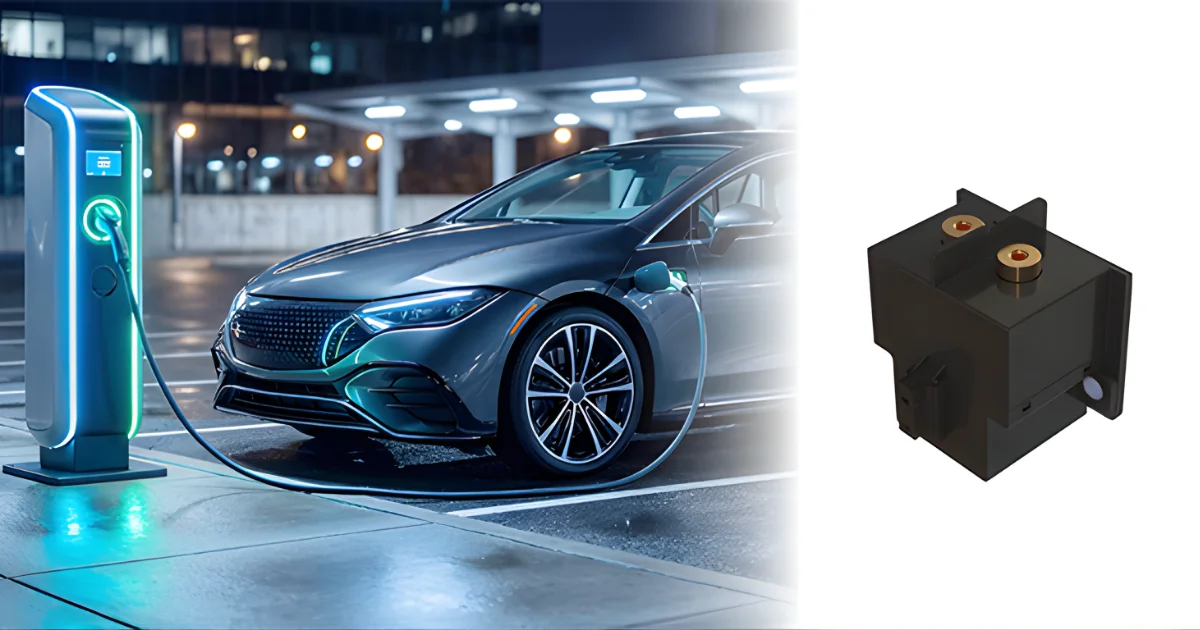
Sensata’s FaultBreak contactor addresses part of that challenge by combining switching and fault interruption within a single device. Instead of separating those responsibilities across multiple components, the design attempts to merge high voltage switching and fault clearing into the same hardware used to connect and isolate the battery system.
When EV Contactors Meet Fuse Level Fault Currents
In most battery systems the contactor is responsible for connecting or isolating the pack during normal operation. Fault clearing is handled elsewhere, typically by a fuse or pyrotechnic device designed to break the circuit if a short develops. That separation of roles simplifies each component but also introduces extra wiring, packaging complexity, and more parts that must coordinate during a fault event.
The FaultBreak device changes that arrangement slightly. It is still a contactor in the sense that it controls high voltage connections within the battery system. At the same time it is designed to interrupt fault currents normally associated with fuse devices. Sensata reports that the device has been validated to clear currents reaching around sixteen kiloamps at voltages approaching one kilovolt.
Those numbers matter because battery short circuits can escalate quickly. Once current climbs into the tens of kiloamps the protection device has to interrupt the arc while preventing damage to surrounding hardware. Clearing the current is only part of the challenge. Controlling the arc energy and managing heat inside the contactor housing becomes equally important.
Resettable Fault Protection Instead of One Time Devices
Traditional pyrofuses solve the fault clearing problem in a very direct way. A small explosive charge separates the conductor when a severe short circuit is detected. It works reliably, but it also means the component must be replaced after the event. For service technicians that replacement is not always trivial because the fuse is often buried deep inside the battery enclosure.
FaultBreak approaches the situation differently by introducing resettable fault interruption into the contactor itself. In cases where a temporary fault or nuisance condition triggers protection, the system may be able to return to operation without replacing hardware. Engineers responsible for vehicle uptime tend to pay attention to that detail because serviceability can affect both warranty cost and customer experience.
The design also includes passive fault clearing behavior. Instead of relying entirely on external detection electronics to command a shutdown, the device itself is capable of interrupting a high magnitude fault. In safety critical systems that independence can add another layer of resilience.
Packaging and Electrical Constraints Inside Battery Systems
Integrating protection and switching inside a single contactor influences the mechanical layout of the battery pack. Removing separate fuse devices and associated busbars simplifies some parts of the architecture but shifts more responsibility into the contactor assembly itself.
Contact resistance becomes a factor here. High resistance would translate directly into power loss and heating during normal operation, especially as EV systems continue moving toward higher voltage levels. Maintaining stable low resistance across the contact surfaces is essential for both efficiency and thermal stability.
Hermetic sealing is another detail mentioned in the design. High voltage contactors in battery environments must tolerate vibration, temperature cycling, and the possibility of contamination from the surrounding enclosure. Sealing the switching elements helps maintain predictable behavior over the lifetime of the vehicle.
These design decisions are rarely obvious until the first prototype pack is assembled. Routing high current paths through the enclosure, balancing thermal loads, and coordinating multiple safety devices often become late stage engineering exercises.
EV Power Systems Continue Consolidating Protection Hardware
Battery architectures in electric vehicles are still evolving. As pack voltages increase and power levels climb, protection devices must react faster and tolerate larger fault currents. At the same time manufacturers continue pushing for lower weight, reduced cost, and easier serviceability.
Components that combine multiple functions inside one device are beginning to appear more frequently in these systems. Integrating switching and protection into a single contactor reflects that direction. It removes parts from the system while asking more of the remaining hardware.
Engineers designing EV battery packs will still rely on layered protection strategies. No single device replaces the need for careful system design. But components like FaultBreak suggest that some of the traditional boundaries between switching, sensing, and protection are starting to blur.
Learn more and read the original announcement at www.sensata.com
You may also like