Meet the Baochip-1x – World's First Open-Source MCU That’s Real
I have been involved with electronics for well over a decade now, and while I find all aspects of electronics fascinating and exciting, there are some things that make me particularly excited. One such example would be the ESP8266; a small WiFi SoC that would go on to change how designers worked with internet protocols. Another example would be the WCH32V; a range of low cost microcontrollers that make RISC-V truly accessible.
But when it comes to semiconductors, nothing makes me excited like seeing open-source hardware that works. This is rare because creating silicon devices requires access to extreme amounts of funding, and anyone capable of designing them will rarely give their IP away. In fact, it is almost guaranteed that if an engineer designs a chip, they will always hold onto it. So, when I saw that a crowdfunded project got enough funding to tape out what its creators describe as the world's first truly open-source MCU, I was ecstatic. Not only is the processor based on the RISC-V architecture, but the MCU really packs a punch.
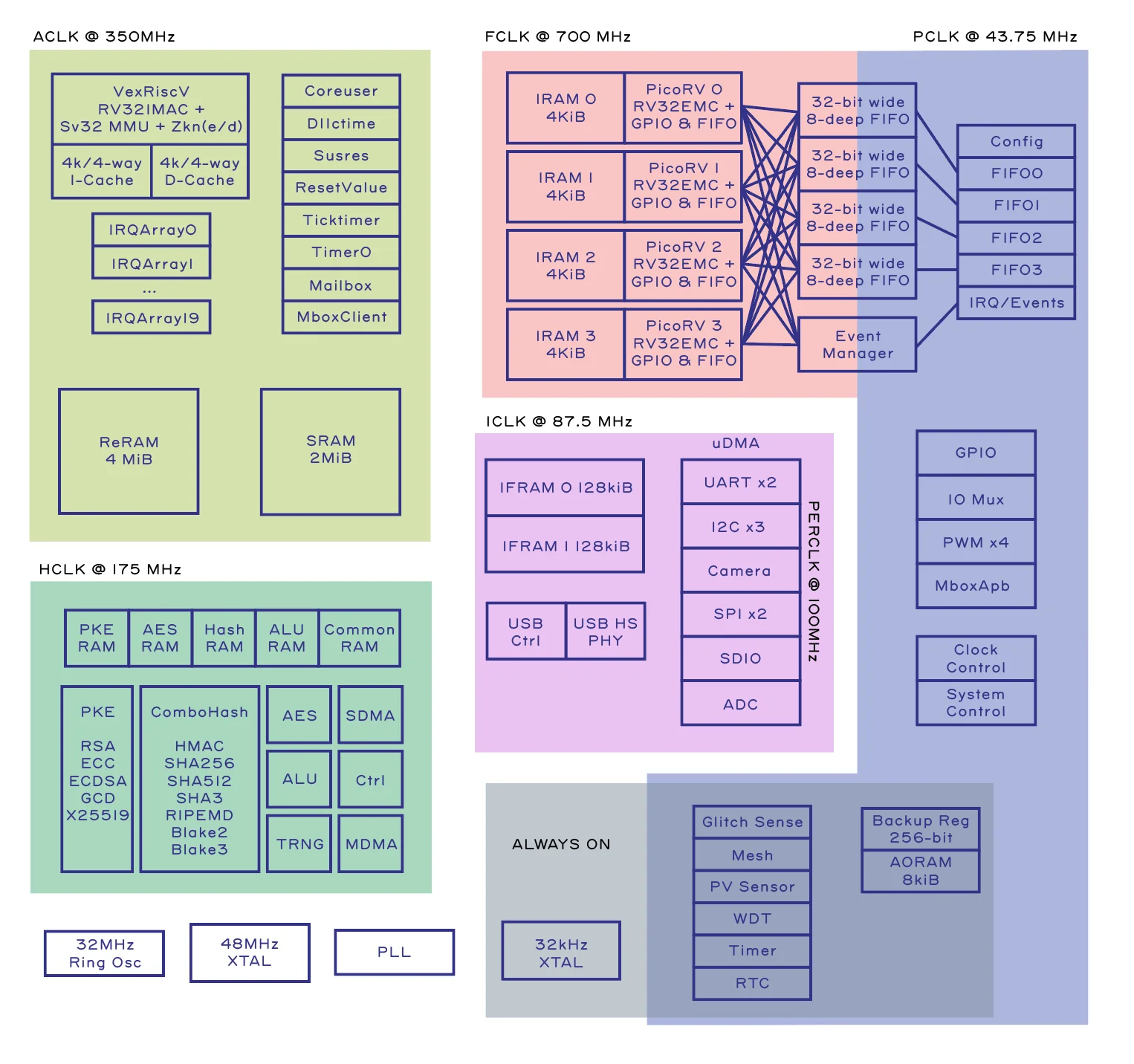
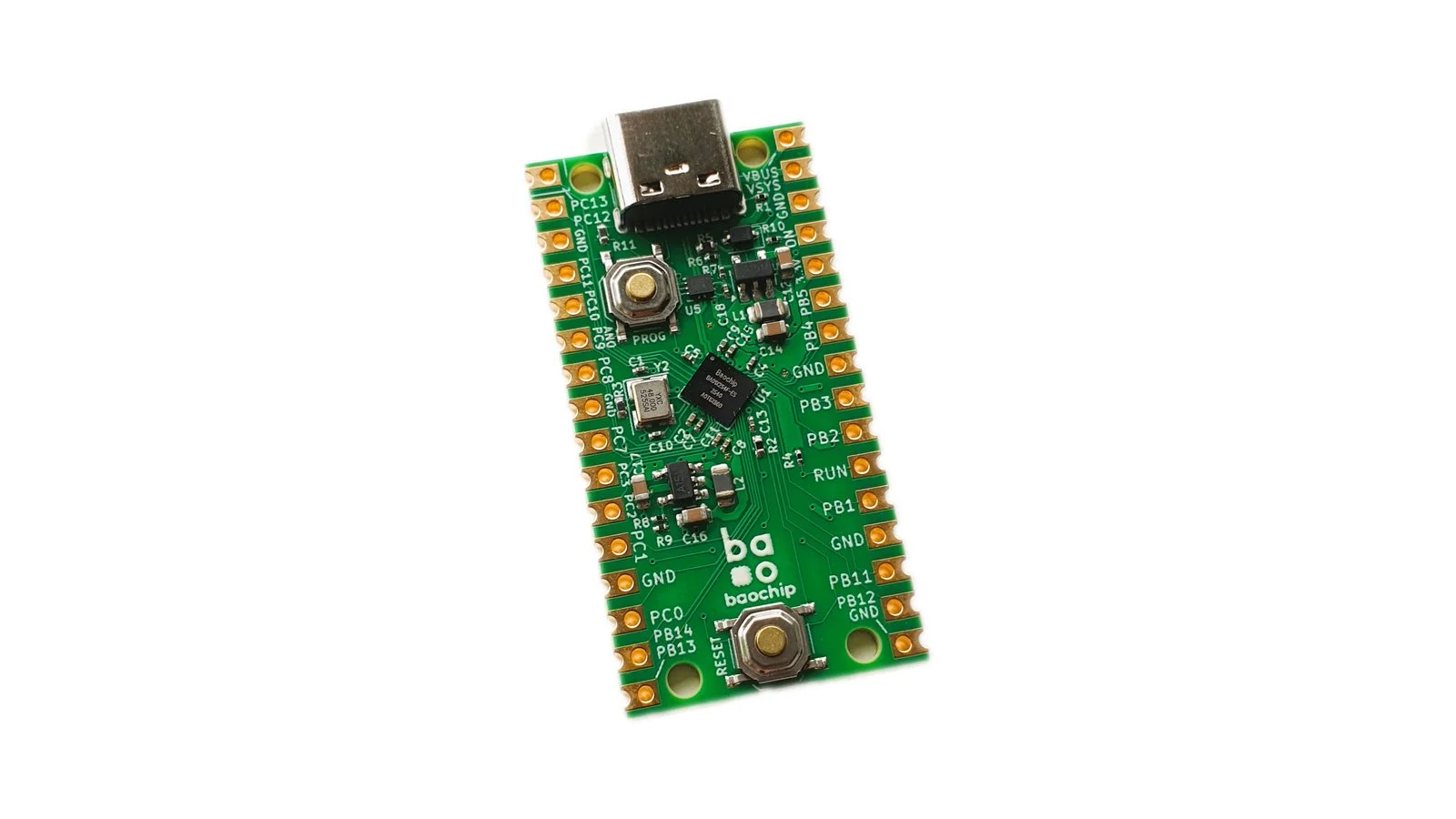
The new microcontroller, called Baochip-1x, has a 350 MHz RV32IMAC CPU (RISC-V RV32I with M, A, C extensions) with an MMU, 2 MiB of on-chip SRAM, 256 KiB of I/O SRAM, 4 MiB of on-chip ReRAM, and four PicoRV cores (the project claims performance up to 700 MHz for those cores) with BIO registers. There are also numerous security features integrated into the MCU, including signed boot, an on-chip TRNG, a key store, one-way counters, and many hardware accelerators for cryptographic functions.
Full Specification:
- Baochip-1x mostly-open RTL SoC
- 350 MHz Vexriscv RV32-IMAC CPU core with MMU
- 4x 700MHz PicoRV RV32-EMC CPU cores with BIO register extensions
- 4MiB of fast on-chip RRAM
- 2MiB of on-chip SRAM + 256k of I/O SRAM
- Cryptographic accelerators
- Physical attack hardening countermeasures
- On-chip ring oscillator-based TRNG
- Fully open source & reproducible bootloader
- Rust-based Xous OS featuring virtual memory for process isolation
- USB high speed device via USB type C connector
- IRIS inspectable
- Dabao evaluation board
- 20 pinned out I/Os
- 2-layer board, optimized for accessible pricing
- [Interactive pinout](https://baochip.github.io/dabao/pinout/ "https://baochip.github.io/dabao/pinout/")
The package itself uses a transparent IRIS material that allows visual inspection of the die. This means that the package is semi-transparent rather than being completely see-through, and it is a very useful feature for those who want to inspect dies for damage and potential interference.
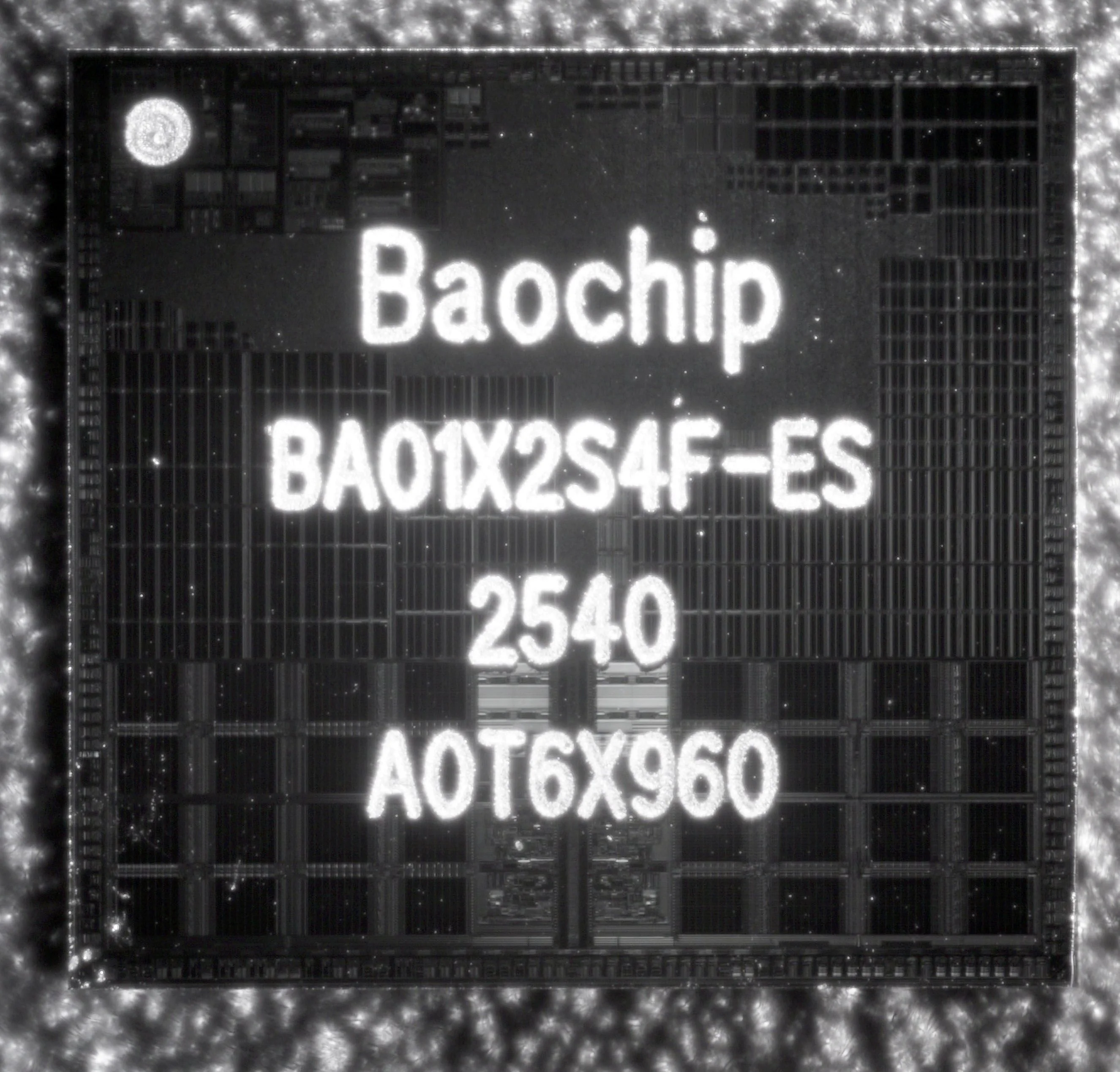
But what makes this device utterly amazing is that its source has been released to the public. The chip RTL and some firmware sources have been published, meaning that not only is the chip open-source at the RTL level, but related firmware sources are available as well. That means anyone wanting to use the MCU can do so without paying license fees or royalties to the original designer.
To round up this amazing project, the MCU is fully open-source, tested, and ready to be used by anyone in the world. The IC has been offered as development units through the crowdfunding campaign, with some tiers providing reels or batches of assembled dev boards.
Why this project is utterly amazing for the open-source community?
It cannot be understated the brilliance of the Baochip-1x microcontroller. Firstly, silicon devices are complex, and anyone capable of designing them will rarely give their IP away. To make matters worse, if a design works and is tested in a real device, that IP will almost always be locked down, with attempts to copy the design made difficult.
However, what makes this device truly amazing is that the MCU is fully open source and tested, with no license fees or royalties required. Its use of a transparent IC package means that it becomes significantly harder for fab houses to integrate extra circuitry into a design, making it attractive for security applications. The fact that it is open source allows anyone to view the source code, either for security audits or for future modification.
But it also shows that crowdsourcing can be a viable path to getting a project turned into reality. While this is open-source I personally hope that the creator of this device is able to monetise it and bank a fortune, because if these become available on reels, I will certainly be in line to purchase a few hundred ICs for my own products.
How RISC-V is the future of CPU design
If we ignore the brilliance of the MCU for a second, we actually see a much more important picture: RISC-V. In general-purpose CPUs, ARM and x86 dominate; for microcontrollers, ARM (the Cortex-M family) is the dominant architecture. Of these, ARM is by far the more popular for embedded designs, which makes sense when considering that ARM provides a wide range of resources for developers, including compilers, libraries, and support.
RISC-V, however, is the opposite. Being an open ISA means there are no ISA licensing fees or royalties that force developers to pay whenever a RISC-V device is manufactured. As such, this opens the market to anyone with the funds and technical knowledge to produce a RISC-V compatible device. Many new devices are now becoming RISC-V based (for example, the ESP32-C3), and the architecture has become very popular in both maker and academic scenes.
With each passing year, RISC-V becomes increasingly important as more and more companies realise the benefits it provides. Because the architecture is open and available with many extensions, it becomes possible for people to accelerate hardware development. Its openness and widespread adoption also make software more readily compatible across implementations, a key feature if it is to gain broader dominance.
Finally, collaboration on the ISA means that it can develop faster, keeping up with trends and needs in the market. The lack of licensing and restrictive fees also means that smaller businesses can enter the computing space without needing to invest gigantic amounts of money, helping to keep competition alive and driving innovation.
You may also like