
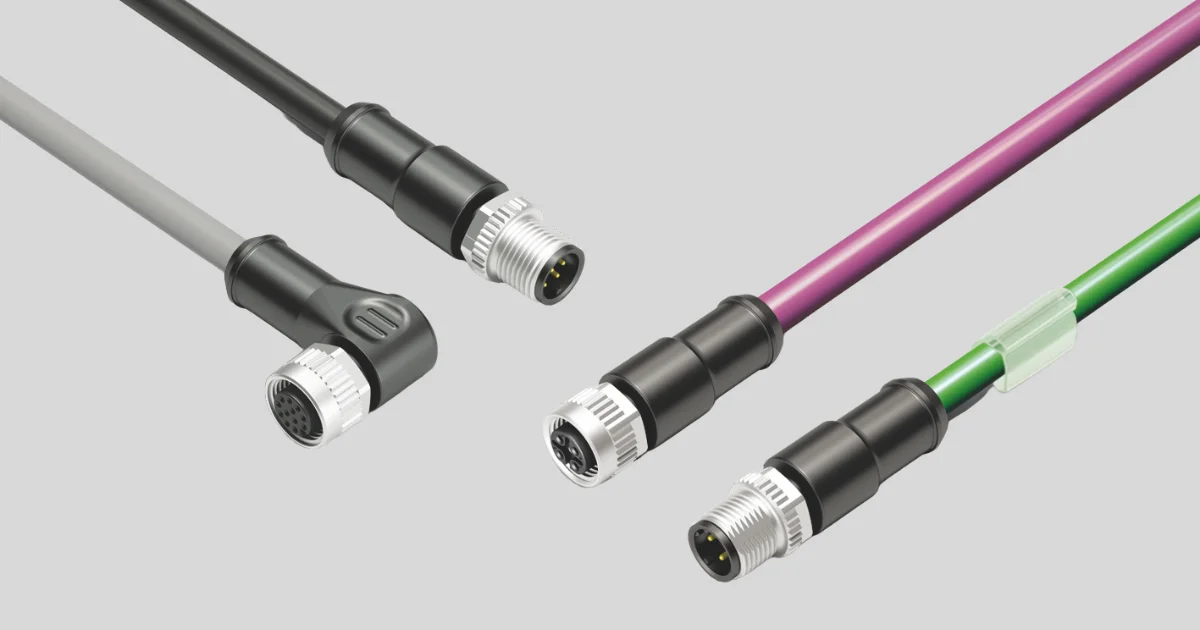
 binder has updated its moulded, shielded M12 connectors with coupling rings that combine knurled and hexagonal geometry. The change is intended to make field assembly more consistent by allowing installers to use tools such as torque wrenches during final tightening.
The updated binder M12 connectors are circular industrial connectors used for signal, data, and power connections in automation systems. In the field, the coupling ring secures the connector interface, so tightening consistency can affect mechanical stability, vibration resistance, and long-term connection reliability.
Hexagonal Geometry Supports Defined Torque
The new coupling ring design adds a hexagonal section to the existing knurled surface. Installers can still begin assembly by hand, using the knurling for grip, before applying a tool for controlled final tightening. That's useful where assembly processes require a defined torque value rather than manual judgment. In industrial environments, especially where work needs to be repeatable and traceable, tool-assisted tightening can help reduce variation between installations.
Shielded M12 Versions Gain The Same Handling Format
binder already uses the knurled and hexagonal coupling ring approach on unshielded connector versions. The latest update extends the same handling concept to moulded, shielded M12 connectors. This gives engineers, installers, and maintenance teams a more consistent mechanical interface across different M12 variants. It also reduces the need to treat shielded and unshielded versions differently during assembly planning.
Field Assembly In Automation Systems
The updated connectors are intended for automation technology, sensors and actuators, mechanical engineering, plant construction, and other industrial systems where M12 connectors are installed under defined mechanical conditions. Controlled tightening is especially relevant in equipment exposed to vibration or long service periods. A connector that is tightened too loosely can risk poor mechanical retention, while over-tightening can create its own reliability problems. A coupling ring that supports torque tools gives installation teams a better way to keep the assembly within process limits.
Practical Change For Installation Teams
The change is small at component level, but it affects how the connector is handled during installation. Manual pre-assembly remains quick, while the final tightening step can be carried out with a suitable tool. For OEMs and machine builders standardizing installation procedures, the updated coupling ring gives shielded M12 connectors the same assembly approach already used on other versions in the binder portfolio.
Learn more and read the original announcement at www.binder-connector.com
Frequently Asked Questions
Why add a hexagonal coupling ring to M12 connectors?
The hexagonal geometry allows installers to use tools such as torque wrenches for controlled final tightening.
Where are these M12 connectors typically used?
They are used in automation systems, sensor and actuator connections, mechanical engineering, plant construction, and equipment requiring defined mechanical assembly conditions.
You may also like