 Recently, IBM revealed their latest computing device that is capable of running both IBM and ARM instructions, creating a dual-architecture able to handle a wide range of tasks. What exactly has IBM done, and why does this show an interesting direction for mainframe computing?
IBM Reveals 2nm Dual-Architecture Chip
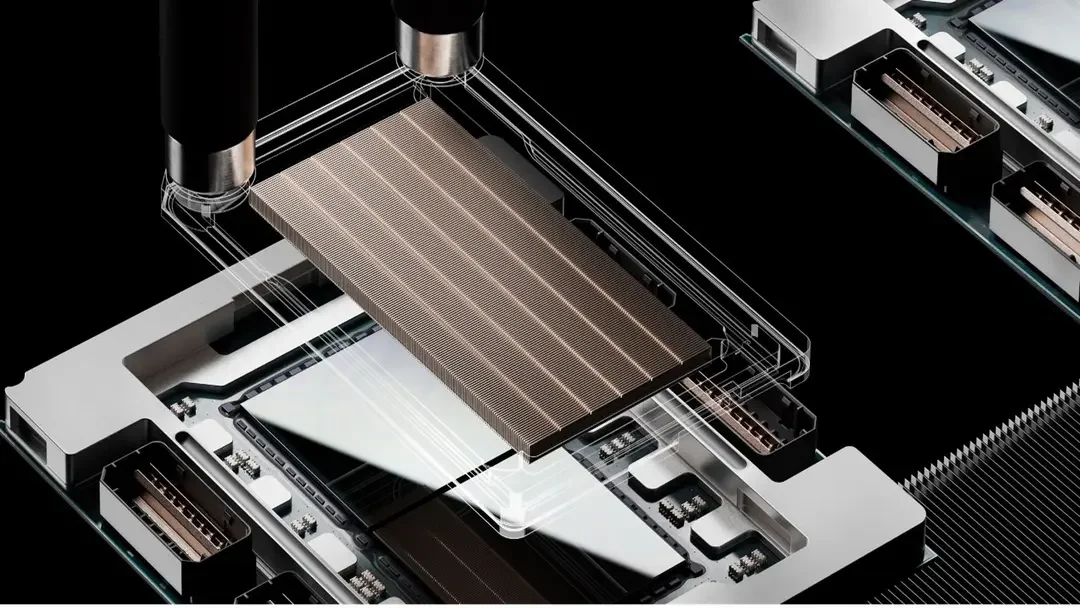
At the recent Hot Chips conference, IBM announced the development of a new 2nm dual-architecture processor that will be used to power future versions of its IBM Z and LinuxONE mainframes.
The biggest change is that the new processor allows Arm-native Linux workloads to run directly on the mainframe alongside existing IBM workloads. This means that businesses will be able to adopt Arm-based applications without needing to deploy separate servers to run them.
This is particularly interesting because IBM currently dominates the mainframe industry, but the wider computing world has increasingly moved towards Arm. By bringing Arm directly into its mainframe architecture, IBM can give customers access to the enormous Arm software ecosystem while retaining the security, reliability and availability that mainframes are known for.
Importantly, existing z/OS and Linux applications will continue to run on the same enterprise infrastructure. Rather than replacing IBM's existing architecture, the new processor effectively adds another architecture alongside it.
The processor itself contains 11 high-performance cores capable of operating above 5.7GHz. Each core is capable of executing both Arm and IBM Z/LinuxONE instructions, meaning IBM does not need to create separate Arm and IBM processors within the same system.
The chip also includes dedicated AI inference accelerators designed to handle workloads including in-transaction fraud detection. An on-chip data-processing unit is also included to accelerate I/O-intensive workloads, while a large cache architecture helps keep data close to the processor.
This is combined with the enormous scalability of IBM's Z and LinuxONE platforms, which can support hundreds of cores and tens of terabytes of memory.
However, the processor is still under development, and IBM has not announced a commercial availability date. Instead, this represents an important hardware milestone in IBM's development of dual-architecture mainframes.
<br>
What Does This Indicate for Mainframe Computing?
When it comes to computing devices, mainframes are somewhat of an unusual beast.
Unlike desktop PCs, laptops and even conventional servers, mainframes are designed around processing enormous numbers of transactions and handling huge quantities of data. They are not really designed to run the applications that we would normally associate with a computer.
This is why mainframes have traditionally been paired with other computing systems capable of running more conventional operating systems and applications.
But if the very CPU inside a mainframe can also execute mainstream Arm applications, this opens up some interesting possibilities.
For starters, it could reduce the amount of additional hardware required around a mainframe. Instead of having one system dedicated to mainframe workloads and another system running Arm applications, both workloads could potentially be handled within the same computing infrastructure. This could reduce the overall size and energy consumption of the system, while also simplifying how data moves between different workloads.
Where things could become particularly interesting, however, is latency and control. If conventional operating systems and mainframe workloads can operate within the same silicon environment, it could become easier to move information between the two. Rather than processing data on one system, sending it across a network and then having another system perform an operation, more of that processing could happen directly within the mainframe.
This could also introduce the possibility of edge mainframes.
Instead of having enormous mainframes located in a small number of centralised facilities, smaller systems could potentially be placed closer to offices, factories, financial institutions and other locations where the data is actually being generated.
That would reduce latency while increasing bandwidth between the data and the system processing it. After all, there is little point in having an incredibly powerful computer if the data it needs has to travel halfway around the planet before it can be processed.
Smaller mainframes could also make the technology accessible to organisations that traditionally could not justify the cost of a large enterprise system. Research institutions, universities and smaller specialist facilities could potentially benefit from mainframe-class processing without needing the enormous infrastructure normally associated with it.
Of course, there are still many challenges before this becomes reality. IBM's processor remains under development, and the practical benefits will depend heavily on how the hardware, operating systems and software ecosystems are integrated.
Nevertheless, IBM has demonstrated an interesting direction for the future of mainframe computing. Rather than keeping mainframes isolated from the wider computing world, bringing Arm directly into the processor could allow these systems to become smaller, more flexible and considerably more connected to conventional computing.
If IBM can successfully bring this technology to market, it could create an entirely new class of mainframe applications.