
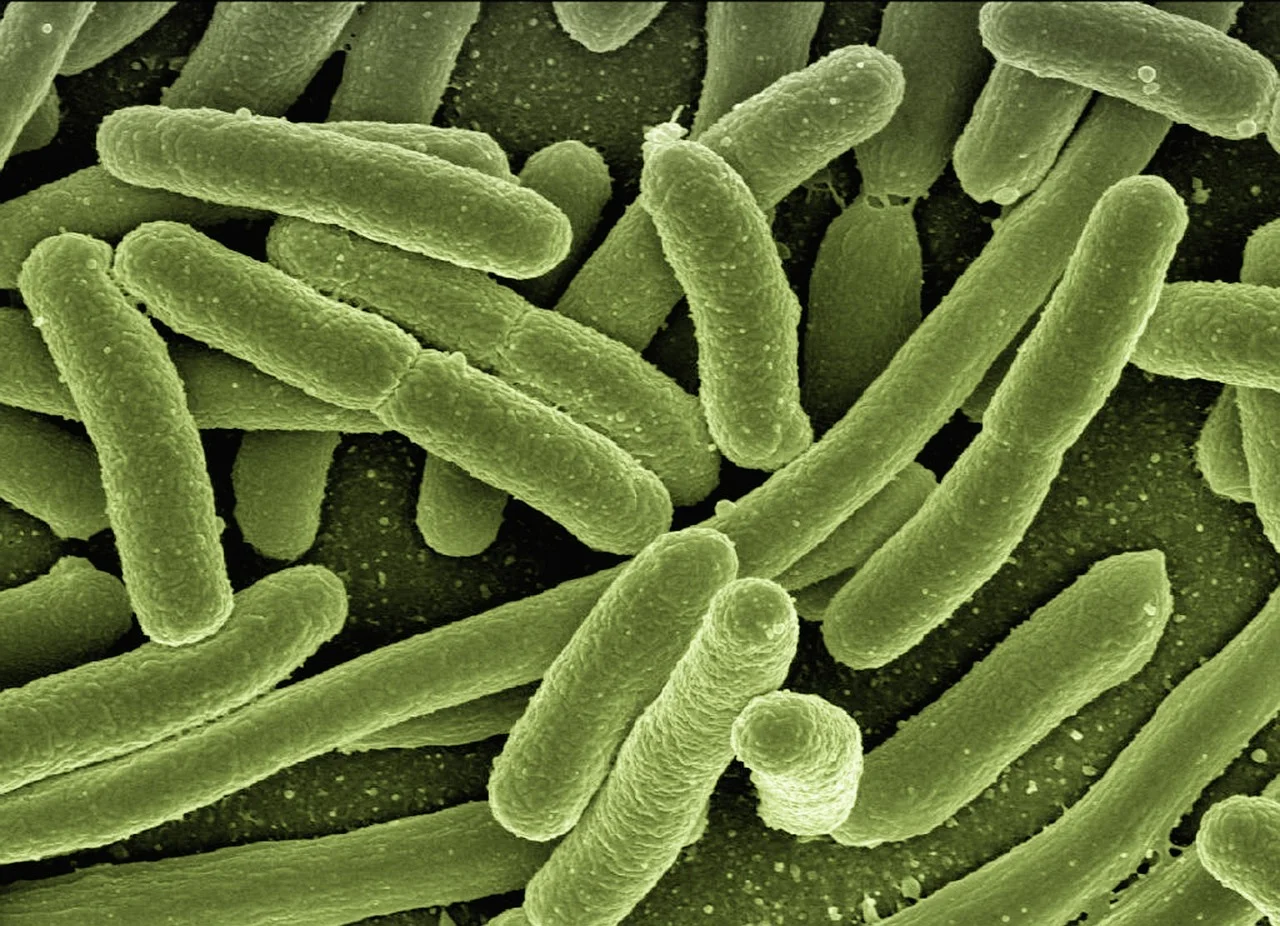
 While biological computing may be something of a fantasy for some, a team of researchers recently demonstrated how bacteria could be turned into living transistors, controlling chemical signals instead of electrical ones. What exactly did the researchers do, and could such computing ever be practical?
Researchers Create Living Transistors from Bacteria
MIT researchers have engineered Pantoea agglomerans bacteria to function in a similar way to biological transistors, using chemical signalling molecules instead of electrical current to control information flow.
The system consists of two bacterial transistor types and three relay strains, creating five modular biological components that can be arranged in different configurations to create more complex circuits.
The two transistor types respond differently to a signalling molecule called OC 6, with one switching on while the other switches off. Both can also detect another molecule, OC 12, and conditionally produce OHC 14 as an output signal.
This output is then passed to three engineered relay strains, which convert OHC 14 into signals that can be understood by subsequent transistor colonies. In effect, the researchers have created a way of chemically wiring separate colonies of bacteria together.
To build the circuits, bacterial colonies were physically printed onto agar approximately 5 mm apart. This spacing allows chemical signals to propagate between neighbouring colonies while maintaining directional information flow through the circuit.
Interestingly, the same transistor strain can perform different computational functions depending on where it is placed within the system.
Using different arrangements, the researchers demonstrated multi-input logic, OR operations and imply logic. Larger circuits were also able to perform functions including addition, parallel signal processing and demultiplexing.
The largest demonstration consisted of 24 interconnected bacterial colonies and was able to perform two-input addition.
However, there is one rather obvious drawback. Each calculation takes around eight hours. This immediately rules bacterial transistors out for almost every conventional computing application, where processors are expected to perform billions of operations every second. But the researchers are not trying to replace silicon CPUs.
Instead, the idea is to create biological computing systems that can operate directly inside living environments.
MIT ultimately envisions these circuits being deployed on plant roots or leaves, where bacterial systems could monitor environmental conditions such as drought or pest activity, process those signals and then automatically trigger biological responses, such as producing a fungicide.
Could Such Computing Ever be Practical?
Considering the amount of time required to perform even relatively simple calculations, there is very little point in using bacteria-based transistors for conventional computing.
Even if they consume very little energy, there is another major engineering problem: the bacteria need to remain alive while also being prevented from growing uncontrollably. That alone introduces a huge amount of complexity.
A conventional transistor can simply sit inside a package for years and continue operating. A biological transistor needs nutrients, suitable environmental conditions and some way of maintaining the physical structure of the circuit.
However, that doesn't mean what the researchers have developed is pointless. In fact, the work demonstrates something far more interesting: bacteria can be used for computation, and chemical computing could one day become viable in highly specialised situations.
One major advantage that biological systems have over electronics is that they can reproduce and repair themselves. If bacterial growth could be properly controlled while preserving the underlying logic structure, then a biological computing system could theoretically recover from physical damage in ways that silicon electronics simply cannot.
This could also make biological systems interesting for applications where processing speed doesn't matter.
Deep-space missions are one example. A spacecraft traveling for decades or even centuries does not necessarily need a computer performing enormous amounts of computation continuously, but it does need systems that can survive for extremely long periods of time.
A biological computer capable of slowly making decisions while repairing itself could therefore offer an unusual advantage.
Remote sensing is another potential application. Places such as deep-ocean hydrothermal vents are incredibly difficult environments for conventional electronics, while bacteria already thrive naturally in these locations. A chemically powered biological sensor could potentially operate in environments where electrical power is difficult to provide and maintenance is almost impossible.
Of course, none of this means bacteria will ever replace modern electronics, and are far too slow, difficult to control and environmentally sensitive for that. But this research demonstrates that computation does not have to be electronic.
If engineers can learn how to control biological logic reliably, bacteria-based systems could eventually open up entirely new classes of devices for environments where silicon simply isn't the best tool for the job.