A Growing Need in Vehicle Power Electronics
Electrification is reshaping the demands on passive components inside vehicles. Inverters for mild hybrid and hybrid electric vehicles are switching faster, operating at higher voltages, and running hotter than ever before. Each of these factors increases stress on the surrounding circuitry. Where engineers once treated snubber capacitors as optional, they are now considered essential for keeping transients under control and limiting EMI in high-power designs.
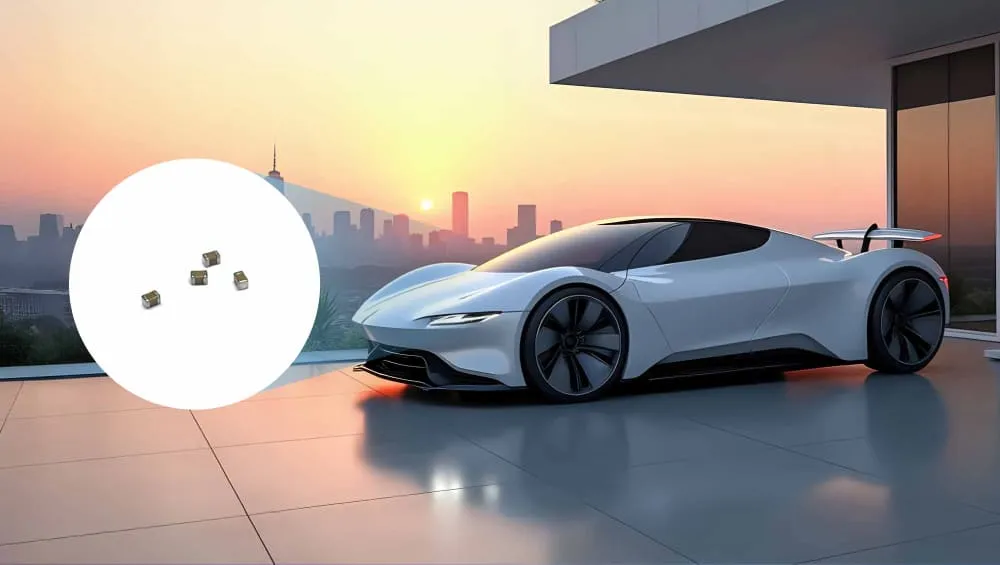
Samsung Electro-Mechanics has responded with the CL21Z104KEY6PJ#, an 0805-inch MLCC that combines a 250 V rating with a 100 nF capacitance. Despite measuring only 2.0 × 1.2 mm, the part delivers the energy storage needed for inverter snubbers while fitting into increasingly compact layouts. The use of an X7T dielectric ensures stable performance from –55 °C up to 125 °C, meeting the thermal demands of under-hood environments.
The device also carries AEC-Q200 qualification, a requirement for automotive applications that need long-term reliability under mechanical shock, vibration, and wide temperature swings.
Designed for Inverter Reliability
By providing high capacitance in such a small footprint, the new MLCC supports inverter miniaturisation without sacrificing stability. In practice, that means designers can keep parasitics low, suppress switching spikes, and maintain voltage stability across demanding duty cycles. With hybrid vehicles pushing toward greater efficiency and tighter packaging, this type of component becomes a key enabler for next-generation inverter designs.
Why It Matters
Power semiconductors often take the spotlight in electric drivetrains, but passive components determine whether those devices can operate reliably in real-world conditions. Samsung’s new 0805 capacitor illustrates how far MLCC technology has come, fitting 100 nF into a size once reserved for far smaller values. For engineers building the next wave of hybrid inverters, it offers a compact and robust option to meet rising demands in automotive power electronics.
Learn more here.
You may also like