
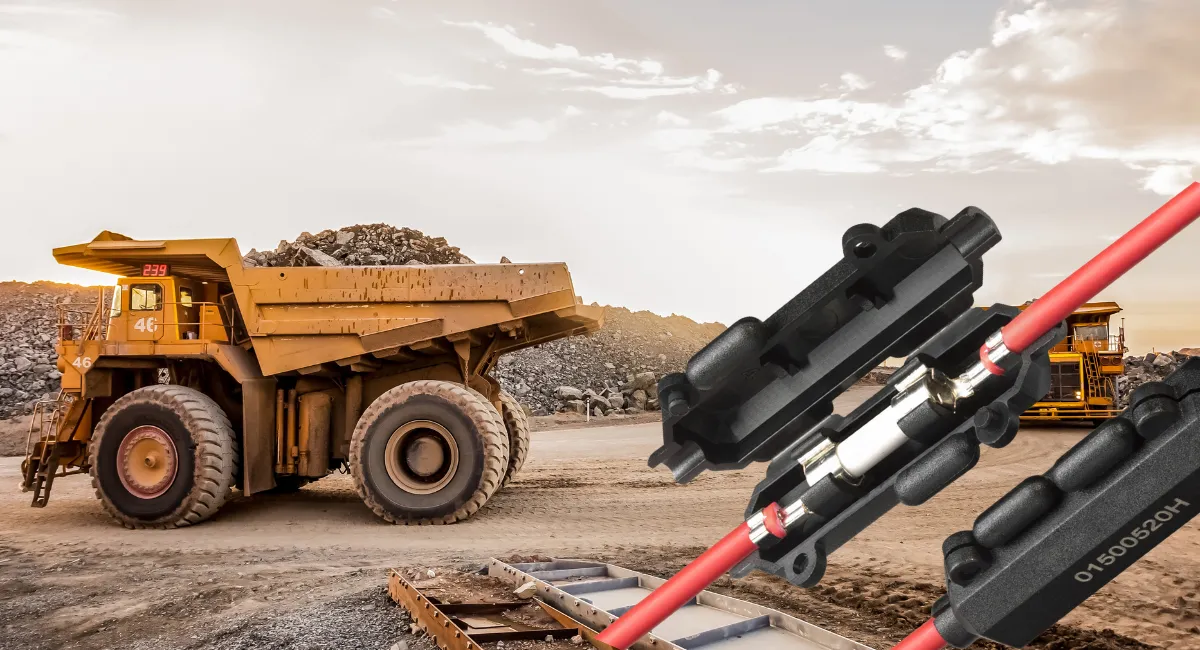
 Automotive and heavy-vehicle electronics are being reshaped by two forces: electrification and complexity. Passenger cars are adding advanced driver assistance, infotainment, and comfort features. At the same time, construction and agricultural machinery are moving toward more electronic control in harsh environments. Both trends create new challenges for components that were once considered simple: switches and fuses.
Switches now have to survive moisture, salt, and vibration while still delivering reliable tactile control. Circuit protection devices have to operate at higher voltages than legacy 12 V systems, particularly as 48 V and 60 V architectures become common in mild hybrids, EV subsystems, and electrified auxiliaries. These are not incremental shifts. They are changing the design rules for basic vehicle electronics.
Against this backdrop, Littelfuse has announced two new additions to its portfolio: a sealed window lift switch for its Carling Technologies L-Series, and the compact 3425L Series surface-mount PPTCs for resettable overcurrent protection.
Sealed Control for Harsh Vehicle Interiors
Mechanical switches may appear mundane, but they remain essential in many vehicle cabins. Operators of construction, agricultural, or on-highway vehicles expect intuitive, reliable controls that can survive years of rough service. Dust, water, and vibration are part of daily operation, and failures in basic controls can quickly take a machine out of service.
The new L-Series window lift switch addresses these needs with above-panel components sealed to an IP67 rating. That level of protection guards against dust ingress and temporary water immersion, conditions common in off-highway cabins that are often exposed to rain, mud, and washdown cycles. The switch also carries resistance ratings for vibration, shock, thermo-shock, moisture, and salt spray.
From an engineering perspective, the advantage is not just durability but ease of integration. The switch mounts into a standard 44 × 22 mm panel opening and uses industry-standard Quick Connect tabs. Current ratings range from 0.4 VA to 20 A, covering both low-power signal applications and high-current window lift motors. A nylon base with a UL 94 V-0 flammability rating, plus an operating range from –40 °C to +85 °C, ensures compliance with automotive safety and reliability requirements.
For OEMs designing cabins that combine mechanical and electronic controls, a switch like this offers a way to maintain familiar ergonomics while meeting modern reliability standards.
Resettable Protection for Higher-Voltage Architectures
The second addition to the portfolio addresses a different challenge: protecting electronics in vehicles that are moving beyond the legacy 12 V environment. As more subsystems migrate to 48 V or even 60 V rails, conventional fuses are no longer always the best fit. Serviceability is one concern. Replacing a blown fuse in a sealed control unit can be impractical. Another is board density. As control electronics pack more functionality into smaller modules, designers need compact protection devices that can be assembled with standard surface-mount processes.
The Littelfuse 3425L Series PPTCs provide resettable overcurrent protection in a 3.4 × 2.5 mm SMD footprint. Operating across 36 V to 60 V, they are positioned squarely at the growing market for mild hybrid, EV, and ADAS electronics. When an overcurrent event occurs, the polymeric material increases resistance to limit current flow. Once the fault is cleared, the device resets automatically.
This behaviour reduces service costs and simplifies design for sealed modules where access is limited. It also fits the automotive industry’s push for components that extend system lifetime and lower total cost of ownership. Compliance with RoHS standards and halogen-free manufacturing adds an environmental dimension that is now a purchasing requirement for many OEMs.
Industry Implications
Both products illustrate how “simple” components are adapting to the new landscape of vehicle electronics. For engineers, the implications are practical. A sealed IP67 switch reduces the risk of warranty claims due to water ingress in heavy-duty vehicles. A resettable PPTC reduces the need for field service visits to replace fuses in EV control modules.
There is also a supply chain consideration. Littelfuse, through its Carling Technologies brand, is offering both mechanical and electronic solutions under one umbrella. For OEMs under pressure to validate components quickly, working with a supplier that covers multiple aspects of vehicle electronics can streamline qualification and long-term support.
Conclusion
Automotive electronics are moving in two directions at once: higher complexity and harsher demands. Cabin controls that once needed only basic sealing now require IP67 performance and vibration resistance. Protection devices that once handled 12 V circuits now need to manage 60 V rails in compact, surface-mounted footprints.
Littelfuse’s latest additions, the L-Series sealed window lift switch and the 3425L Series resettable PPTCs, reflect these trends. They are not just incremental updates but responses to broader shifts in how vehicles are designed and used. For engineers working on the next generation of electrified, ruggedised platforms, they highlight the continuing evolution of the components that form the foundation of reliable system design.
Learn more and read the original article on Littelfuse.com
You may also like