
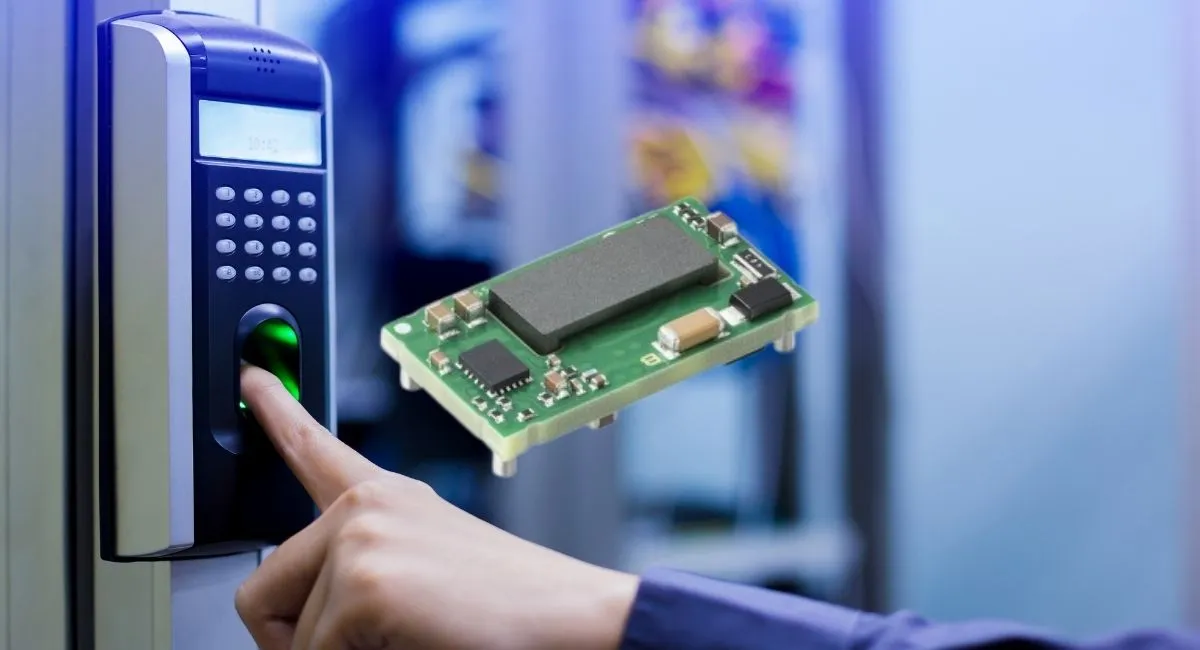
 Murata has broadened its range of isolated DC-DC converters with new modules designed to meet IEEE 802.3af requirements. The converters supply up to 15 W through a single Ethernet cable, covering the needs of many network-enabled devices such as IP cameras, biometric terminals, and access points. For this class of equipment, the 802.3af standard remains a practical match. It balances cost, efficiency, and installation simplicity.
Small Form Factor, Broad Temperature Range
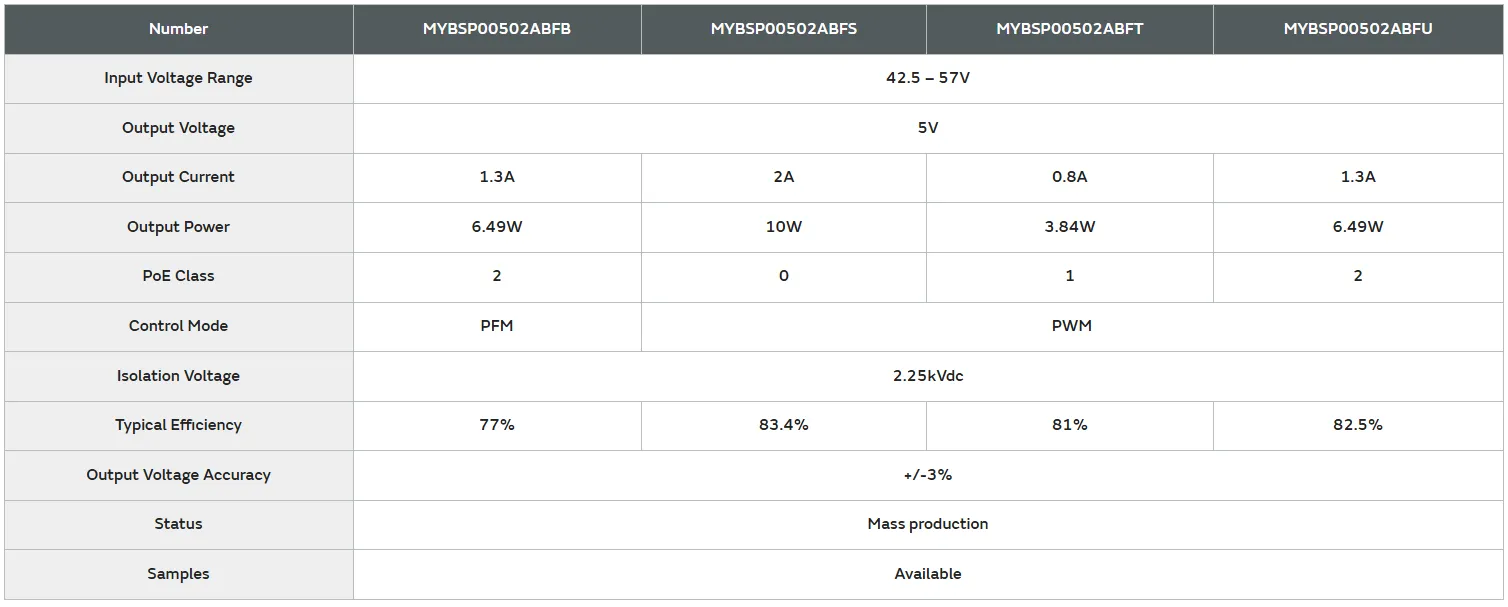
The converters come in a low-profile 26 × 14.8 × 6.2 mm package, giving engineers more freedom when laying out dense circuit boards. Each module delivers a regulated 5 V output from a 37–57 V input range, with isolation specified at 2.25 kVdc. Operation is rated from –40 °C to +85 °C, ensuring consistent behaviour whether deployed in indoor racks or mounted in outdoor enclosures.
Four versions are available, offering outputs from 3.8 W to 10 W with efficiencies that climb above 80% in most cases. The highest-power model delivers 10 W at 83.4% efficiency, while lighter variants suit devices with modest power budgets. Each aligns with an IEEE 802.3af class, allowing designers to select the module that best matches their end application.
Supporting a Wide Range of Applications
These converters are aimed at powered devices that rely on stable and compact power supplies. In imaging systems such as security cameras, low noise performance helps maintain signal integrity. In biometric authentication units, regulated supply rails are essential for consistent sensor operation. The compact size also supports thinner profiles in equipment like IP phones and speakers, where available board area is always limited.
Availability
Murata has already begun mass production of the new modules, and samples are being made available through its website and sales representatives. With demand for PoE continuing to expand across smart buildings, surveillance, and connected infrastructure, the additions provide engineers with a practical, space-saving power solution.
Learn more and read the original article on www.murata.com
You may also like