
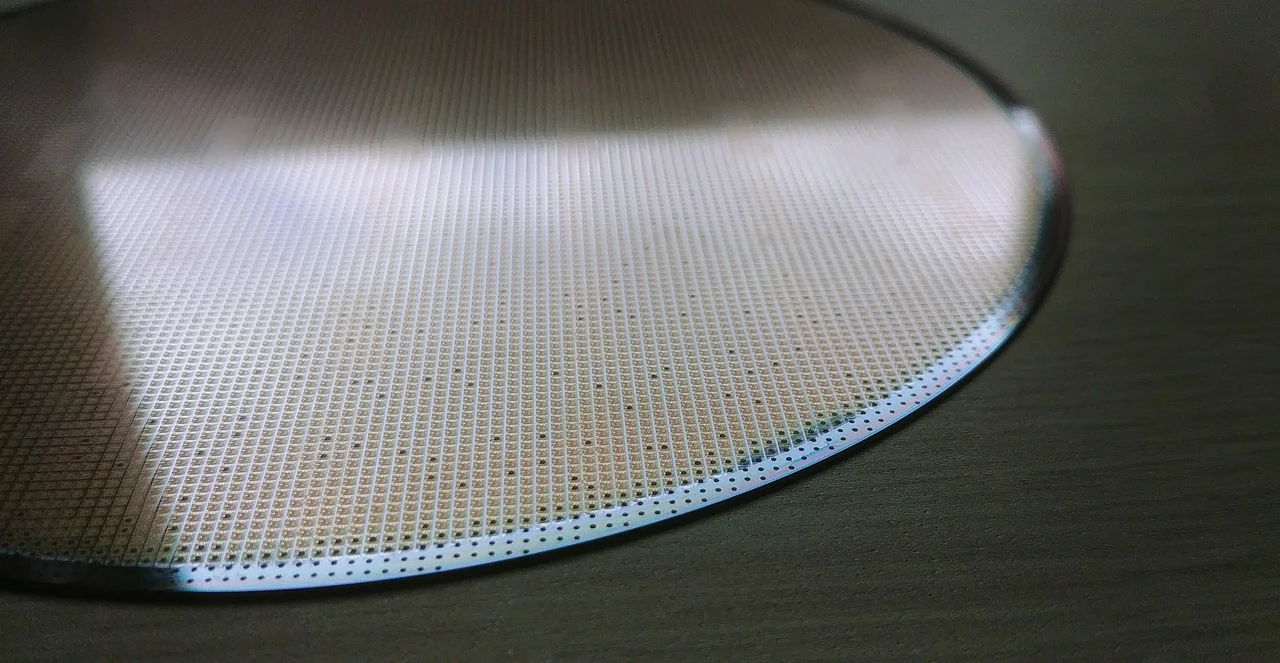
The Need for Thinner Wafers
Power electronics are becoming ever more critical in the world we live in, with EVs needing massive amounts of energy distribution across large distances, datacentres needing high power distribution, and AI requiring power distribution while minimising energy wastage. Of course, many engineers turn to newer technologies such as SiC and GaN when looking to solve these problems, but while these do indeed increase operating voltages and reduce energy losses, they are not the only factor that can help with improved efficiency.
One area that has been causing headaches for engineers for some time now is the thickness of wafers used to fabricate semiconductors. As wafers become thinner, more wafers can be cut from the same ingot (as a result of the reduced wafer thickness), but while this may help to decrease the price, it isn’t the primary reason for trying to reduce wafer thicknesses.
One of the main reasons why engineers are looking to reduce the thickness of wafers is to reduce bulk electrical resistance and, in some device architectures, shorten conduction paths, as this allows for greater currents to flow.
Additionally, as device and module designs evolve, extracting heat from active regions becomes a limiting factor; the use of a thinner wafer not only reduces the total resistance, but also improves thermal properties, which makes it easier to extract heat from devices.
China Wafer Fabs Now Producing 35 micron wafers
A Shanghai production line has recently announced a process that it says will enable power-semiconductor wafers to be manufactured with a thickness of 35 microns. This advancement in wafer technology could be key in improving the energy efficiency of EV fast chargers, power converters, and electrical infrastructure, subject to independent verification and details on wafer diameter and substrate material.
Producing wafers thinner than 50 microns poses a very serious challenge for engineers because semiconductor materials becomes extremely fragile and prone to warping, bowing, and fracturing under stress. To combat fragility and thermal limits, effective heat management is essential in high-power fast-charging systems.
The production line has deployed a double-sided cooling solution, which provides a thermal path from both sides of the wafer, resulting in reduced thermal resistance (improved thermal conduction) and improved reliability under thermal cycling.
And the implications of ultra-thin power wafers on a global scale are incredible, including smaller hardware per kilowatt and improved uptime under thermal cycling, both of which reduce energy waste. This development could also help standardize rollouts by enabling smaller, higher-power-density modules, potentially reducing regional variations in charger design.
Does this show that China is rapidly winning the semiconductor race?
This latest announcement seems to suggest that China is making significant progress toward being a more influential semiconductor player globally, though it is not definitive proof that China has "won" the semiconductor race. Historically, China has often focused on consumer and lower-end markets rather than leading-edge process technology, but the country has recently increased funding and research into advanced semiconductor areas.
If China continues to demonstrate its ability in the semiconductor industry, it may lead to increased geopolitical competition over advanced chipmaking technologies, whereby western nations might restrict certain technology transfers. Such actions could complicate China’s access to some advanced equipment and materials, which would affect its ability to advance in specific cutting-edge areas.
But what exactly does this announcement tell us about China’s ability in the semiconductor industry?
Well, this announcement does show that if China is to compete with the west, it must focus on the cutting edge of technology instead of the low-end market. One area that stands out where China could become a leader is memory, and given current supply and restriction dynamics, obtaining the latest high-end memory chips can be difficult in China, so domestic development could be a strategic focus.
Of course, there are other power semiconductors that China could target, such as MOSFETs and transistors, and if this power wafer announcement is anything to go by, they very well could be leading the field in certain niches. If the West doesn’t act fast to develop new semiconductor solutions, our next EV charger, inverter, or AI power management IC could be sourced from China.
You may also like