
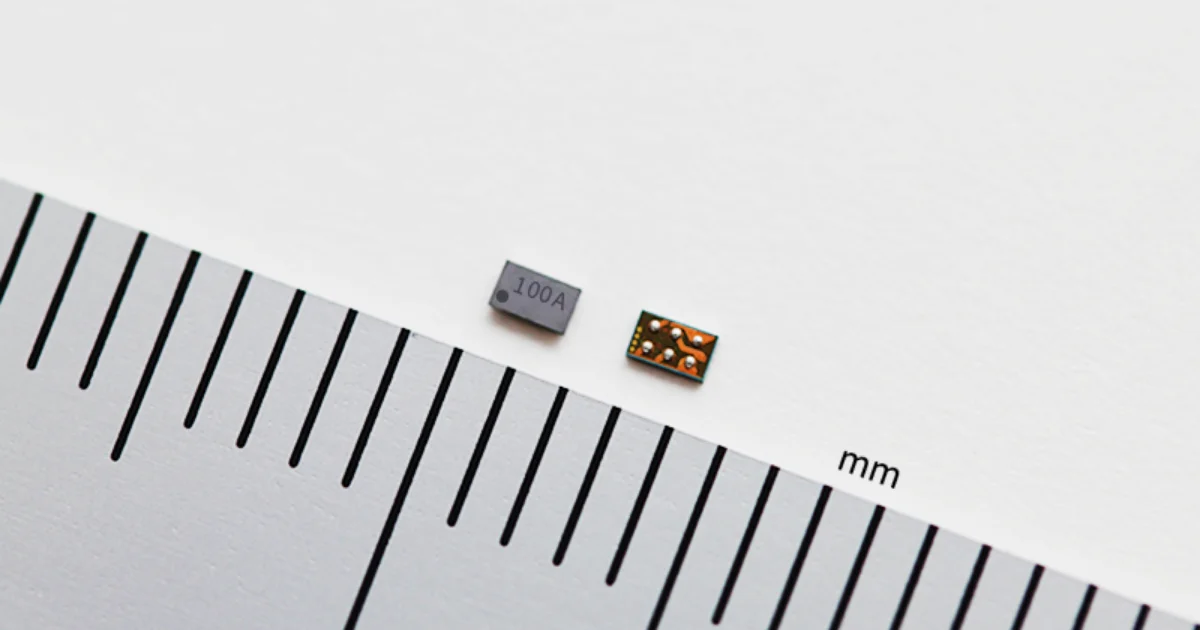
 Battery-powered IoT hardware continues to push toward longer deployment cycles, smaller physical footprints, and more aggressive sleep-state power targets. Nisshinbo Micro Devices is addressing that space with the new NC2650 Series, a synchronous step-down DC/DC switching regulator built around an ultra-low quiescent current specification of 85 nA while still supporting output currents up to 1 A.
The NC2650 Series is a synchronous buck regulator designed for low-power IoT equipment, wireless sensor nodes, wearable electronics, and battery-operated embedded systems. It is intended for systems that spend long periods in standby mode but still need to support short bursts of higher current during wireless communication or active sensing operations.
That operating profile is becoming increasingly common across industrial sensors, keyless entry systems, smartwatches, and compact edge devices where replacing batteries frequently is either impractical or too expensive from a maintenance perspective.
Ultra-Low Quiescent Current For Long Standby Operation
The headline specification here is the 85 nA quiescent current figure. According to Nisshinbo, that is roughly one-third of the quiescent current used by its existing products. For hardware that spends most of its life asleep, the regulator’s own current draw can quietly become a major part of the battery budget. A sensor node or medical patch may only wake for short measurement or transmit windows, so the power rail has to stay efficient when the system is doing very little as well as when the load suddenly rises.
The NC2650 also uses automatic PWM and PFM switching. At light loads, it runs in PFM mode to reduce power use. As current demand increases, it moves into PWM operation. Nisshinbo states that the regulator maintains efficiency above 80% in the 1 µA to 10 µA load region while still reaching output currents up to 1 A when required.
Low Ripple Output For Wireless And Sensor Hardware
Alongside standby efficiency, Nisshinbo has also focused on output behavior during communication activity. The regulator delivers a typical ripple voltage of 10 mVpp at a 500 mA output current. The company also says the load transient response has been improved, with voltage drop reduced to less than half that of its existing products. This is useful in wireless and sensor hardware because the load is rarely steady. A radio stage can move from sleep to transmit quickly, and the power rail has to follow that change without causing unnecessary disturbance to the rest of the circuit.
The NC2650 Series works from a 1.8 V to 5.5 V input. Output voltage versions are factory fixed from 0.8 V to 3.3 V in 0.1 V steps. The device also includes undervoltage lockout, thermal shutdown, soft-start, and optional auto-discharge depending on the version selected.
WLCSP Package For Small Battery-Powered Designs
The regulator is supplied in Nisshinbo’s WLCSP-6-ZA2 package, measuring 1.47 mm × 0.87 mm × 0.4 mm. That gives designers a very small power device for boards where the regulator has to sit close to sensors, radio circuitry, or other compact low-voltage electronics.
Applications listed by Nisshinbo include hearing aids, medical patches, smartwatches, IoT edge terminals, keyless entry systems, alarms, and sensor network devices. The specified operating junction temperature range is -40°C to 125°C. Sample orders for the NC2650 Series opened on May 20, 2026, and monthly production is planned at one million units.
View the NC2650 Series datasheet
Learn more and read the original announcement at www.nisshinbo-microdevices.co.jp
Technology Overview
The NC2650 Series is a synchronous step-down DC/DC switching regulator family designed for low-power battery-operated electronics. It supports input voltages from 1.8 V to 5.5 V, delivers output currents up to 1 A, and operates with a typical quiescent current of 85 nA.
The device automatically switches between PWM and PFM operation depending on load conditions to maintain efficiency across both standby and active operating states. It is housed in a WLCSP-6-ZA2 package measuring 1.47 mm × 0.87 mm × 0.4 mm.
Frequently Asked Questions
What applications is the NC2650 Series intended for?
Nisshinbo lists hearing aids, medical patches, smartwatches, IoT edge terminals, alarms, wireless sensor network equipment, and keyless entry systems among the target applications.
Does the NC2650 support low-power standby operation?
Yes. The regulator features a typical quiescent current of 85 nA and maintains efficiency above 80% in the 1 µA to 10 µA load range.
What package is used for the NC2650?
The device uses a WLCSP-6-ZA2 package with dimensions of 1.47 mm × 0.87 mm × 0.4 mm for high-density compact designs.
You may also like