 As researchers continue to find solutions to reduce the size of electronics, a team of researchers recently showed how DNA could be used as memory. But what exactly did they do, and could biology be the answer for future electronics?
Researchers Use DNA as Memory
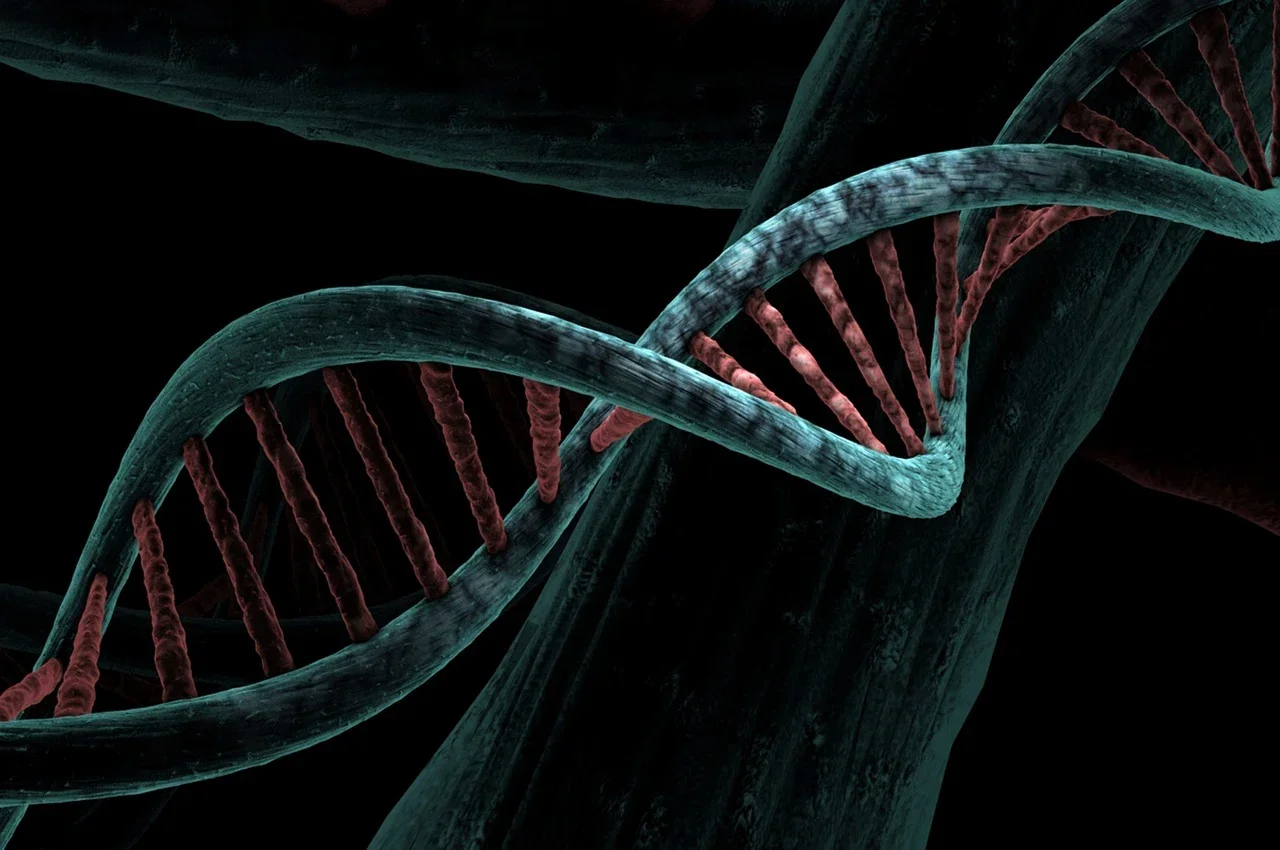
Researchers at Penn State have developed a bio-hybrid memory device that combines synthetic DNA with crystalline perovskite, creating a technology that could eventually help reduce the energy requirements of high-density computing and AI systems.
The device is based around a memristor, a type of electronic component that can retain information about its previous electrical state. Unlike conventional computing architectures where memory and processing are generally separated, memristors can potentially allow information to be both stored and processed in the same location.
This makes them particularly interesting for neuromorphic computing, where engineers are attempting to create systems that operate more like the human brain by combining memory and processing. However, getting these devices to operate effectively at extremely small scales is a major challenge. To overcome this, the Penn State researchers turned to one of the most fundamental biological structures found in nature: DNA.
Rather than using naturally occurring DNA, the researchers created short synthetic DNA sequences that could be computationally designed and precisely arranged. The DNA was then combined with silver nanoparticles, making the material electrically conductive while also helping to control its structure.
This modified DNA was subsequently integrated with thin films of crystalline perovskite. The combination is important because DNA offers an extremely small and highly controllable structure, while the semiconductor material provides the electrical properties required for a memory device. By engineering the interface between the two materials, the researchers were able to create stable electrical pathways through the device.
The resulting memory could operate at less than 0.1 volts, while remaining functional at room temperature for more than six weeks.
Perhaps more importantly, the researchers found that the device could perform its memory function using significantly less energy than conventional approaches. According to the team, the technology used around one-tenth the power of comparable technologies while also providing higher storage capacity, with the researchers describing it as roughly 100 times more power efficient than traditional storage devices.
These characteristics could be particularly valuable as the demand for computing continues to increase.
Modern AI systems require enormous amounts of data to be moved between processors and memory. Every time information is transferred, energy is consumed, meaning that the separation between processing and storage becomes increasingly problematic as computing workloads grow.
A memory technology that can both store and process information could therefore reduce the amount of data that needs to travel between different parts of a computer.
The use of synthetic DNA is also particularly interesting because its structure can be designed rather than simply manufactured according to the limitations of conventional semiconductor materials. Researchers can create specific sequences and arrange them at extremely small scales, providing a way to control the electrical and structural properties of the resulting material.
The Penn State team, including researchers Kavya S. Keremane, Bed Poudel and Neela H. Yennawar, now plans to investigate how the technology can be developed further and whether similar bio-hybrid structures could be used for other electronic applications.
Of course, this does not mean that computers will suddenly start being built out of DNA. The technology remains at the research stage, and considerable work will be required before a device like this could be manufactured reliably at commercial scale.
However, it does demonstrate that biological materials can potentially be combined with conventional semiconductor technologies to create electronic devices with properties that are difficult to achieve using traditional materials alone.
Could Biology be the Key to Future Electronics?
There is an interesting reason why researchers are increasingly looking towards biology when trying to solve some of the biggest problems facing modern electronics.
The human brain is an extraordinarily efficient computing system. It can process enormous quantities of information, recognise patterns, control a body and perform complex decision-making while consuming roughly the power of a small light bulb.
Modern computers can outperform the brain in many individual tasks, but they often require substantially more energy to perform complex workloads, particularly when large amounts of data have to be continually transferred between processors and memory.
This has led researchers to investigate whether some of the characteristics of biological systems can be replicated in electronics.
One approach is to develop neuromorphic computers that mimic the way neurons communicate. Another is to use biological structures themselves as part of computing hardware.
DNA is particularly attractive because it can store enormous amounts of information within an incredibly small physical volume. Unlike conventional electronic memory, where information is represented by electrical states in semiconductor devices, DNA stores information through its molecular structure.
The Penn State research demonstrates a different possibility: rather than simply using DNA as a replacement for conventional data storage, it can become part of an electronic device. However, biology also introduces some significant problems.
Biological systems are highly sensitive to their environment. Temperature, contamination and chemical conditions can all affect biological materials, while living biological systems are vulnerable to degradation and biological processes that conventional electronics do not have to deal with.
This becomes particularly problematic when trying to manufacture thousands or millions of identical computing devices. A silicon transistor can be manufactured with extremely precise and repeatable processes, whereas biological materials can be considerably more complicated to control. There is also the problem of interfacing biology with electronics.
Electronic systems operate using voltages, currents and electromagnetic signals, while biological systems rely heavily on chemical interactions and molecular processes. Converting information between these two domains can introduce additional complexity and energy requirements. Then there is the question of manufacturing.
A technology that works inside a carefully controlled laboratory environment is very different from one that can be manufactured billions of times and placed inside consumer electronics, servers and industrial systems. Semiconductor manufacturing has spent decades developing processes capable of producing enormous numbers of highly consistent devices, and any biological alternative would need to reach a similar level of reliability.
For these reasons, biological computing is unlikely to replace conventional semiconductor technology anytime soon.
Instead, the most realistic future could involve hybrid systems where biological materials perform specific functions that conventional electronics struggle to achieve efficiently. DNA could provide extremely dense information storage. Biological molecules could provide new methods of sensing or signal processing. Meanwhile, conventional semiconductor electronics could handle the communication, control and processing required to operate the system. This is what makes research like the Penn State device so interesting. The goal is not necessarily to replace silicon with biology, but to combine the strengths of both.
As AI systems become increasingly demanding, reducing the energy required to store and move information is becoming just as important as making processors faster.
If researchers can eventually turn the remarkable information density and structural flexibility of DNA into reliable electronic components, biology could become another tool in the semiconductor engineer's toolbox.
It is unlikely that the computers of the future will be entirely biological. However, the next generation of electronics could contain considerably more biology than the computers we use today.
You may also like