
 As Level 4 autonomous driving expands into larger fleets and new markets, we explore the electronics, compute platforms and safety architectures supporting that transition.
Self-driving vehicles are already operating on public roads. Waymo says its vehicles have completed more than 20 million fully autonomous rides and travelled over 300 million kilometres without a human driver. The technology itself is therefore not new, but recent announcements suggest the industry is increasingly looking at how autonomous driving can be reproduced across larger fleets, different vehicle platforms and new locations.
That challenge came into focus in September when Lucid and European mobility provider Bolt announced plans to jointly develop an autonomous vehicle platform for Europe. Bolt aims to deploy at least 25,000 autonomous Lucid vehicles across multiple European cities and countries, based on Lucid's upcoming Midsize platform and expected to use NVIDIA Hyperion. A day earlier, Waymo announced plans to introduce its commercial autonomous ride-hailing service in Singapore in 2028. NVIDIA, meanwhile, says manufacturers including BYD, Geely, Isuzu and Nissan are developing Level 4-ready vehicle programmes around its technology.
What Level 4 Autonomous Driving Actually Means
SAE International defines Level 4 as High Driving Automation, one step below Level 5, or Full Driving Automation. Importantly, the levels apply to the driving automation feature being used rather than simply assigning a permanent automation level to the vehicle itself. At Levels 3 to 5, an Automated Driving System (ADS) performs the complete dynamic driving task when the relevant feature is engaged. Level 4 operation remains limited to the conditions under which that feature is designed to function, rather than providing the unrestricted driving automation associated with Level 5.
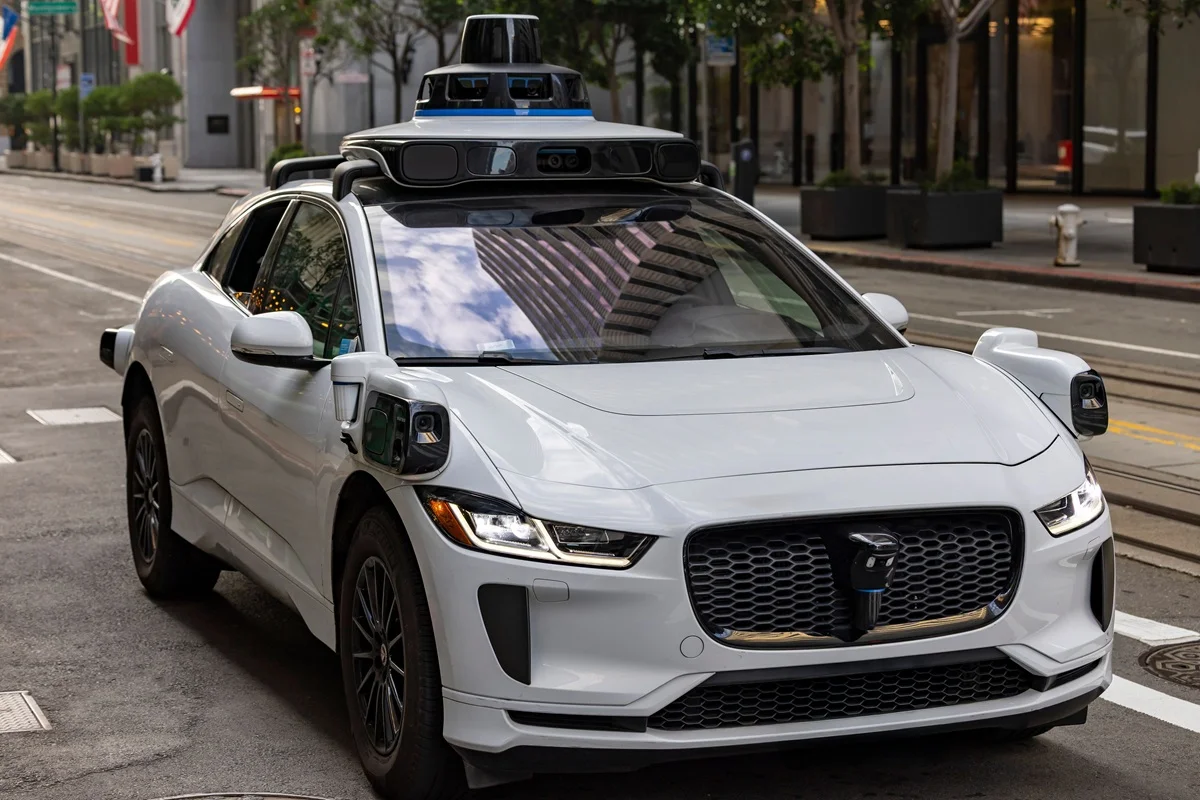
Waymo's planned expansion into Singapore shows why that distinction matters in practice. The company intends to bring an initial fleet of all-electric Jaguar I-PACE vehicles to the country before trained specialists begin manual driving in 2027. Waymo specifically identifies local road geometry and monsoon weather patterns among the factors to which it will adapt the Waymo Driver before its planned commercial launch in 2028. Experience accumulated in one operating environment cannot simply be assumed to cover another, even when the underlying autonomous driving system has already accumulated hundreds of millions of kilometres elsewhere.
Building Autonomy Around A Common Platform
An autonomous driving system depends on multiple electronic systems working together. Sensors provide information about the surrounding environment, compute hardware processes incoming data, networks move information around the vehicle and the resulting decisions ultimately have to interact with vehicle systems. There is no single electronic architecture prescribed for Level 4, and developers can take different approaches to sensing and processing. Waymo, for example, describes its current sensor suite as combining lidar, radar and cameras to provide 360-degree coverage.
Alongside these individual implementations, standardized reference architectures are becoming part of the industry's approach. NVIDIA describes Hyperion as a reference architecture integrating compute, sensors, networking and safety systems. NVIDIA says BYD, Geely and Nissan are developing Level 4 programmes based on Hyperion, while Isuzu and TIER IV are developing a Level 4 autonomous bus using NVIDIA DRIVE AGX Thor, which forms part of the platform. A common foundation does not make these vehicles identical, but it allows elements of the underlying architecture to be used across different vehicle programmes rather than requiring each project to start from an entirely new electronic foundation.
The Lucid and Bolt programme is expected to use Hyperion, but the way the two companies intend to develop the vehicle is equally significant. Rather than taking a completed production vehicle and subsequently converting it for autonomous operation, Lucid and Bolt plan to work together from the product-development stage. Bolt will contribute to vehicle requirements as well as software, safety and operational parameters before owning and operating the resulting fleet. For a programme targeting at least 25,000 vehicles, autonomy is therefore being considered as part of the vehicle and service from the beginning rather than as an isolated technology added later.
Engineering For Failure At Level 4
Processing performance is only one part of the engineering problem. Sensors can become obscured or degraded, electronic components can fail, communication links can be interrupted and software can encounter unexpected inputs. These possibilities are particularly important at Level 4 because, within the conditions for which the feature is designed, the ADS performs the complete dynamic driving task rather than depending on a human driver to continuously supervise the road.
Automotive safety also involves more than dealing with components that have failed. ISO 26262 addresses functional safety in safety-related electrical and electronic systems, including hazards associated with malfunctioning behaviour. ISO 21448, Safety of the Intended Functionality (SOTIF), addresses another part of the problem: unreasonable risk that can arise from functional insufficiencies, including limitations in the specification or performance of the intended functionality. This is particularly relevant to automated driving, where situational awareness can depend on complex sensors and processing algorithms.
The distinction is important. An autonomous driving system has to account not only for a sensor or processor developing a fault, but also for the possibility that functioning hardware and software may encounter conditions in which the intended functionality has limitations. SAE J3016 does not prescribe how manufacturers must solve these problems, nor does Level 4 inherently require a specified number of cameras, processors or communication links. UL 4600, a safety standard for evaluating autonomous products that require no human driver supervision, similarly does not mandate a particular technology for creating the autonomous system.
NVIDIA's approach combines Hyperion with Halos OS, which it describes as a safety architecture for autonomous vehicles. NVIDIA says Halos OS is built on ASIL D-certified DriveOS foundations and includes safety middleware and deployable safety applications. This does not mean an entire vehicle becomes safe simply by using the platform. Hardware, software, sensing and their interaction with the rest of the vehicle still have to be considered as part of the complete system, including how faults and functional limitations are identified and addressed.
From Testing Autonomous Vehicles To Deploying Thousands
Validation presents another challenge because public roads contain a huge range of possible situations. Weather changes, road layouts differ, visibility varies and other road users do not always behave predictably. Common scenarios will naturally occur during physical testing, but unusual combinations of events can be difficult to reproduce consistently, particularly when engineers need to investigate the same situation repeatedly after modifying the autonomous driving system.
This is one reason scenario-based testing and simulation have become important tools in autonomous vehicle development. Instead of relying solely on accumulating road mileage, engineers can evaluate defined situations through a combination of simulation and physical testing. This is particularly useful for rare or safety-critical scenarios that would be difficult to reproduce repeatedly on public roads, and it allows developers to examine how a system responds when individual parameters are changed.
NVIDIA's Omniverse NuRec technologies provide one current example. They use captured real-world data to reconstruct environments that can then be used in interactive simulation, allowing developers to replay and modify scenarios without physically recreating every event on a public road. Simulation does not replace real-world testing, nor does successful performance in a simulated scenario by itself demonstrate that a vehicle is safe, but it expands the range of conditions that can practically be investigated during development.
Moving from development fleets to tens of thousands of vehicles also changes the scale at which these engineering decisions have to work. The Lucid and Bolt target is not simply a demonstration programme: Bolt intends to own and operate the fleet across multiple European cities and countries. Hardware and software therefore need to form part of a vehicle platform capable of being produced and operated repeatedly, while deployment into different locations introduces additional environmental and operational considerations. Waymo's Singapore programme provides a useful illustration from the opposite direction, with an established autonomous system being adapted to another road environment before commercial operation begins.
The recent announcements do not mean Level 4 autonomous driving has become a solved engineering problem. Lucid and Bolt's 25,000-vehicle fleet remains a target rather than an existing deployment, Waymo's Singapore service is planned for 2028 and several of the Level 4 programmes being developed around Hyperion have yet to enter commercial operation.
What they do show is how the challenge is changing. Demonstrating that an autonomous vehicle can operate successfully in a defined environment is one problem. Reproducing that capability across thousands of vehicles, different platforms and new operating environments is another, and that may increasingly define the next stage of Level 4 autonomous driving.
You may also like