
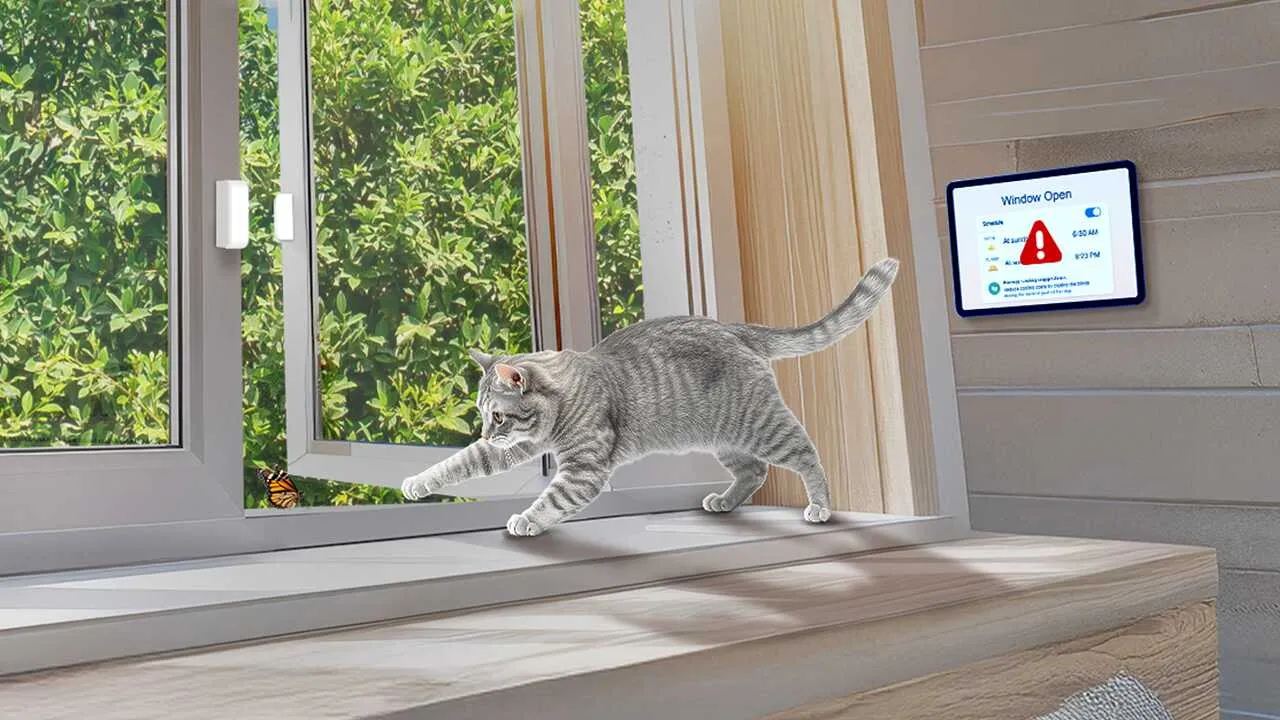
 Texas Instruments has launched the TMAG5134, an in-plane Hall-effect switch that can pick up magnetic fields as low as 1 mT. It uses an integrated magnetic concentrator to reach that sensitivity, which means designers can shrink the magnet size, save space, and cut system cost in applications like door and window sensors, appliances, and consumer devices.
A Practical Alternative to Magnetoresistive Sensors
Designers who need high sensitivity have often used reed switches or magneto resistive options such as TMR, AMR, or GMR sensors. These deliver great performance but usually add cost and manufacturing complexity.
The TMAG5134 changes that equation. By taking Hall-effect technology into the same sensitivity range, it lets engineers replace those higher-cost solutions while keeping a simple, robust design approach.
Flexible Placement and Low Power
Because it senses fields parallel to the PCB, the TMAG5134 gives more freedom when placing magnets in tight enclosures. It also draws just 0.6 μA on average, which makes it practical for battery-powered systems that need to stay on for years at a time.
TI backs the part with design support, including an evaluation module and access to its Magnetic Sense Simulator (TIMSS), which lets you model field strength and switching points before building hardware.
Opening Up New Applications
Jason Cole, vice president and general manager of Sensing Products at TI, noted: “The electronics we interact with in our daily lives, from our laptops to our smart home systems, use sensors to help make decisions based on the world around them. The TMAG5134 Hall-effect switch builds on years of TI innovation, delivering a simplified, cost-effective solution that creates new possibilities for design engineers across industries.”
In practice, this means Hall-effect switches can now be considered for projects that previously required magneto resistive parts, closing a long-standing performance gap while keeping costs down.
Availability
The TMAG5134 is in production now and available through TI.com along with supporting design resources.
Learn more and read the original article on www.ti.com
You may also like