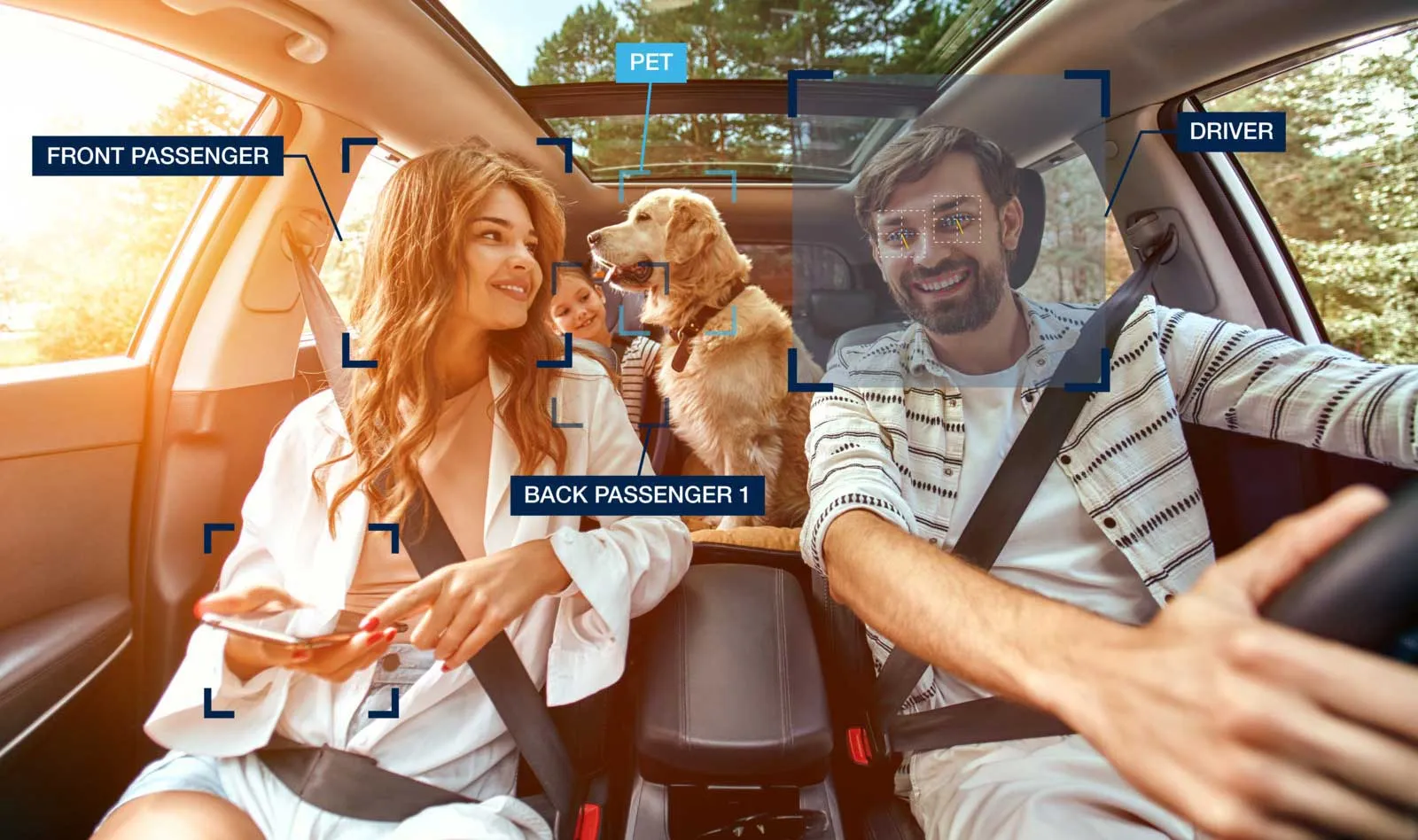
 Interior sensing has moved from research projects to real-world vehicles, driven by new regulations and the growing role of in-cabin safety. Driver monitoring is increasingly mandatory in Europe, while automakers are also exploring occupant monitoring to improve protection in emergencies and create more responsive cabin environments. Until recently, these systems required multiple cameras and sensors, adding cost and complexity.
A Joint Approach from ST and Tobii
STMicroelectronics and Tobii are now taking a different path. The two companies have begun mass production of an interior sensing platform designed for a European carmaker. Instead of using separate devices for driver and occupant monitoring, the system relies on a single wide-angle camera that functions both day and night.
At the core is ST’s VD1940 image sensor, part of the company’s SafeSense portfolio. The 5.1 MP hybrid pixel array captures both colour and infrared light, enabling the same device to deliver clear imaging in varied conditions. Tobii’s algorithms then process dual video streams, supporting both driver monitoring (DMS) and occupant monitoring (OMS) from the same source.
Why It Matters
Consolidating interior sensing into a single camera brings several benefits. It reduces hardware cost by cutting the number of components, saves valuable space in the cabin, and simplifies integration for OEMs. For safety systems, the hybrid sensor approach ensures reliable performance regardless of lighting conditions, which is critical for compliance with functional safety standards.
For users, the technology can mean more than just safety. By combining visible and infrared sensing with Tobii’s attention computing, the system can recognise presence, posture, and behaviour, creating opportunities for adaptive user experiences as well as accident prevention.
Ready for Mass Adoption
The collaboration shows how in-cabin monitoring is moving rapidly toward mainstream adoption. With mass production underway in Europe, ST and Tobii are positioning their combined platform as a cost-effective and technically mature solution that meets both regulatory and market demands. As automakers transition to zonal architectures and software-defined features, consolidated interior sensing will likely become a core building block in next-generation vehicles.
Learn more and read the original article on www.st.com
Image Credit: STMicroelectronics
You may also like