
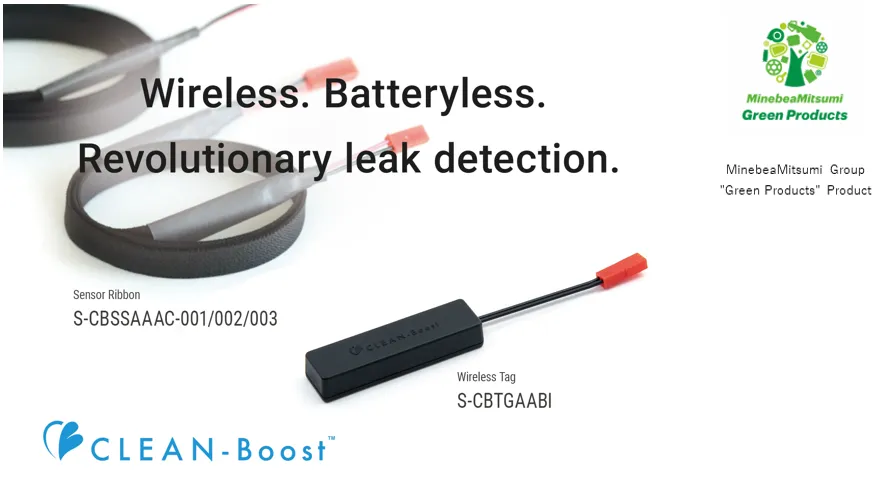
 Unexpected water leaks continue to be a common cause of downtime in industrial plants and data centres. A few drops near high density servers or power distribution can escalate into expensive flooding, equipment damage and service outages.
Many detection systems exist already, but batteries and cabling requirements often make deployment difficult in confined or legacy environments. That leaves critical infrastructure exposed to leaks that start small but grow rapidly.
Battery-free Detection for Challenging Installations
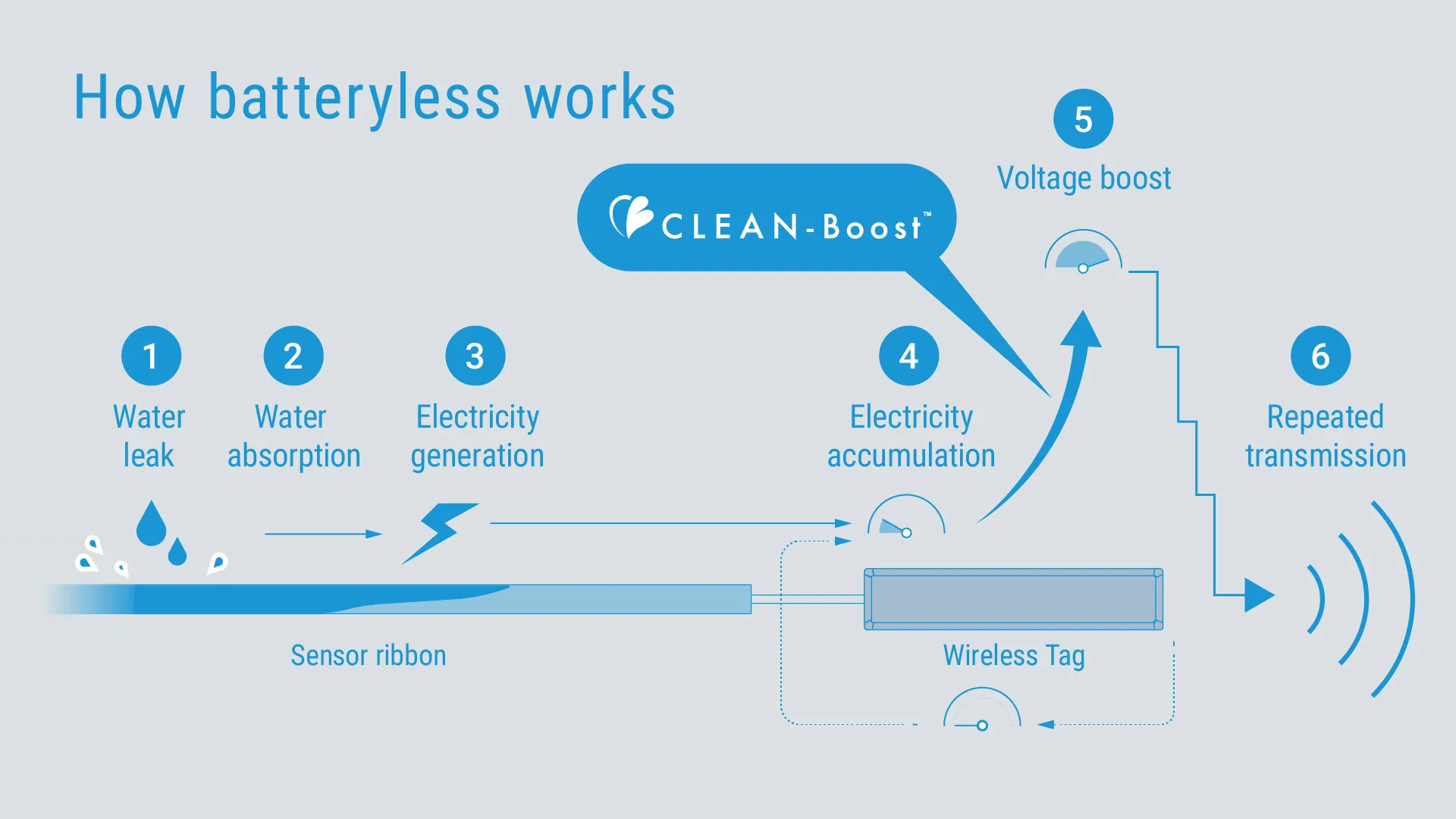
ABLIC has expanded its battery-less water leak sensor to the United States and European markets after receiving FCC and CE approvals. The device is built around the company’s CLEAN Boost energy harvesting technology, enabling wireless leak monitoring without external power. This approach reduces installation effort and removes the maintenance burden created by thousands of small batteries across a facility.
The sensing element uses a ribbon that changes condition when moisture is present. Once activated, the onboard system manages the small amount of harvested energy to deliver periodic Bluetooth Low Energy alerts. ABLIC reports sensitivity down to three drops of water depending on surface conditions. For facilities relying on chilled water, condensate handling or high flow cooling loops, this early visibility provides valuable protection against continuity threats.
Technical Enhancements for Harsh Environments
To suit more demanding infrastructure, ABLIC has expanded the operating temperature range up to 85 degrees Celsius. That allows the sensor to function in environments found in chemical processing, metal stamping, food production lines and high heat server racks. Wireless communication follows Bluetooth Low Energy 5.0 with a typical range of 100 to 200 metres depending on building layout and receiver locations.
Because no battery is used, there is no risk of cell leakage or spent battery disposal. This helps maintenance teams remain focused on prevention rather than scheduled component replacement cycles.
Designed for Retrofitting and Continuous Monitoring
The sensor can be installed in areas that are normally inaccessible due to cabling restrictions. Ageing buildings with weaker pipework and high occupancy data centres with limited space can benefit from the drop level sensitivity. A small leak that might otherwise remain hidden behind equipment can be flagged early and handled before faults propagate.
The combination of wireless alerts and maintenance free operation gives engineers a practical tool to manage water related risks in environments where unplanned downtime carries severe cost.
Learn more and read the original announcement on www.ablic.com
You may also like