
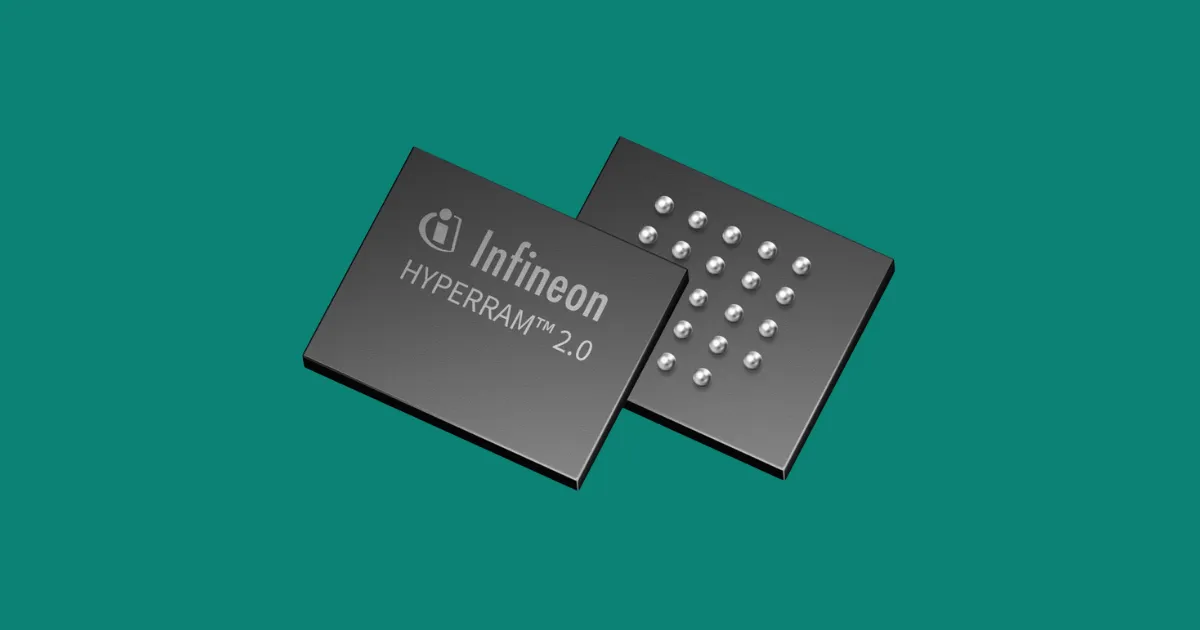
 Small FPGA based systems often need external memory to support control processing, buffering or lightweight AI workloads, but adding DDR memory introduces routing complexity and a large pin requirement that can exceed the I O budget of entry level devices. This is especially limiting in edge and board management designs where power and cost need to stay low. AMD has now validated Infineon’s 64 megabit HYPERRAM and matching controller IP on the Spartan UltraScale Plus SCU35 evaluation platform, creating a memory option that avoids DDR overhead while providing enough bandwidth for MicroBlaze V based processing.
Low Pin External Memory for FPGA Designs
HYPERRAM uses a HyperBus interface that keeps pin count modest compared to DDR while maintaining useful throughput for embedded tasks. On the SCU35 platform the memory is paired with Infineon’s controller IP, which can be licensed for use in customer designs and provides a ready made interface for the MicroBlaze V soft core RISC V processor. For engineers, this removes the need to implement and verify a memory controller from scratch, which can be one of the more time consuming parts of FPGA bring up. It also reduces risk during early prototyping since timing and behaviour are already characterised on the evaluation kit.
Practical Impact on System Architecture
Using HYPERRAM changes the trade off between performance, board space and power. The memory offers enough density for tasks such as sensor buffering, expansion management or lightweight inference without introducing the signal integrity considerations that come with DDR. The small footprint and reduced pin usage can simplify routing on compact boards and free I O for peripherals. In systems where the FPGA handles board level control or out of band management, consistent access latency is often more valuable than peak bandwidth, which aligns well with HyperBus characteristics.
Applications and Integration Considerations
The validation targets applications that sit between microcontroller and high end FPGA domains, including I O expansion modules, industrial control planes and edge devices that need modest external memory without a large cost increase. Designers can use the SCU35 evaluation kit to test the memory and controller combination before moving to production, with both the device and IP already available.
Learn more and read the original announcement at www.infineon.com
You may also like