
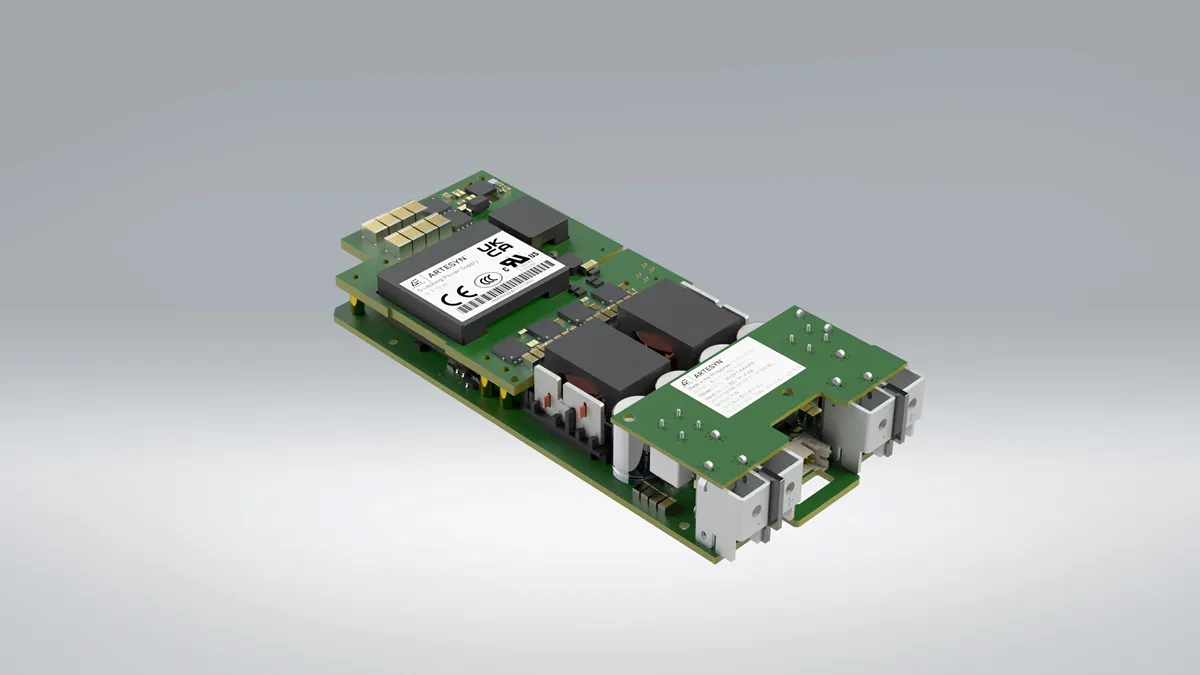
 Designers working on industrial, medical or test systems often need multiple isolated rails, yet the choice is usually between oversized supplies or custom power builds that slow development. Advanced Energy’s latest 24 V by 24 V dual output module for the NeoPower family enters that gap by offering two tightly regulated rails in a compact 2.5 inch footprint. The idea is to let engineers scale a configurable supply to match complex loads without taking on a fresh power architecture each time requirements shift.
Dual Output Architecture For Complex Systems
The ability to integrate two independent 24 V outputs into a single module offers a practical advantage in platforms where separate power domains are common. Many industrial controllers, sensing modules or medical subsystems operate on multiple isolated rails to contain noise or meet regulatory constraints. The new NeoPower module lifts that burden from the system designer by allowing as many as sixteen outputs per supply when combined with other modules in the series. For projects with frequent revisions or multiple product variants, this reduces the need to redesign an entire supply whenever a new load appears or an isolation requirement changes.
Electrical Performance In A Compact Form
The module delivers up to 400 W combined, with each output capable of 150 W. Achieving that level of density in a 2.5 inch form factor gives engineers some headroom when pushing for smaller enclosures or consolidating boards in tight mechanical spaces. Digital control governs voltage and current behaviour across the outputs, which helps maintain predictable performance when loads move quickly or when rails must recover from transient events. Engineers designing for medical and industrial spheres will also note the compliance with IEC 62368, IEC 60601 and SEMI F47, which reduces the certification burden for systems that combine sensitive electronics with higher power instrumentation.
Integration Flexibility For Industrial And Medical Platforms
Modularity has become a defining requirement in markets with long product lifecycles and varied configuration sets. A supply that can be built from standardized pieces rather than custom blocks allows engineering teams to maintain one electrical foundation across a portfolio of equipment. In practice, this can shorten prototype cycles because teams can adjust output count and power distribution without altering thermal paths, safety circuitry or EMI behaviour. For example, semiconductor tools or medical imaging subsystems often require isolated power feeds for actuators, sensors and communication boards. Being able to slot in a dual output module rather than building bespoke rails can reduce the number of unique assemblies that must be stocked, tested and supported.
Future Implications For Configurable Power Systems
Configurable architectures continue to replace fixed function supplies as equipment evolves toward multi domain designs. This trend reflects a broader shift in how engineers approach power. Instead of starting with a rigid scheme, teams build supplies around modular blocks that stay constant even as the loads change. The new NeoPower dual output module fits neatly into this direction by offering a dense building block that can be combined with others to support both immediate and future requirements. For companies balancing cost, time and regulatory constraints, such modules provide a way to scale product features without revisiting the core power architecture every cycle.
Learn more and read the original announcement at www.advancedenergy.com
You may also like