
The Growing China Problem
The electronics industry has always depended on minerals sourced from across the globe. For common materials such as copper and iron, this is inconvenient but manageable. Multiple countries mine them, markets are deep, and substitution is often possible. The situation, however, changes quite quickly when you move into less common materials such as germanium, gallium, cobalt, and the rare earth elements. These are not mined or processed everywhere, and in many cases the supply chain narrows to a small number of facilities.
One country, above all else, appears repeatedly in the processing and supply of many of these critical materials, and that country is China. Twenty years ago, this was viewed largely as an economic advantage. Lower costs and vertically integrated supply chains made manufacturing efficient. Today, that same concentration represents a strategic vulnerability for Western economies. China is responsible for the majority of rare earth element processing, particularly those used in high performance permanent magnets found in motors, robotics, EV drivetrains, and wind turbines. It also dominates the refining of gallium and germanium, both of which are important in compound semiconductors, RF devices, infrared systems, and certain high efficiency photovoltaic technologies.
However, the issue is not simply where products are assembled. Even if final manufacturing occurs outside China, the upstream materials often do not. That means Western products remain exposed to Chinese policy decisions, whether through export controls, licensing requirements, production quotas, or price manipulation. Thus, if a single country controls a large percentage of the world’s refining capacity, it holds structural leverage over every downstream manufacturer.
This becomes particularly relevant as the United States attempts to reshore semiconductor manufacturing and rebuild domestic industrial capacity. But onshoring fabrication is only one layer of the stack. If the raw materials required for advanced packaging, power electronics, and high frequency devices are still dependent on overseas processing, then the supply chain is not truly independent. You have simply moved the final step while leaving the foundation untouched.
China’s growing geopolitical influence further amplifies this problem. Control over critical minerals can blunt the impact of tariffs and embargoes, and economic pressure works poorly when the targeted country supplies materials your own industries cannot function without. This dynamic was demonstrated when China announced export restrictions on germanium and gallium.
Compounding the issue is China’s increasing technological self reliance. A decade ago, significant portions of its technology stack depended heavily on Western firms. Since then, China has invested heavily in AI, communications infrastructure, chip design, and domestic semiconductor manufacturing. Clear gaps in leading edge fabrication, advanced lithography equipment, and some specialized EDA tools do remain, but the overall direction is toward reduced exposure to foreign constraints.
This internal capability of China now creates an uncomfortable asymmetry with the West, as nations are now attempting to reduce dependence on Chinese manufacturing while remaining dependent on Chinese material processing. Meanwhile, China is reducing dependence on Western technology at the same time it retains control over upstream resources. From a purely engineering perspective, that is a supply chain imbalance with obvious failure modes.
Japan turns to recycling old motors to bypass China’s minerals
Recently, Japan announced that it will be turning to recycling old motors to help it avoid Chinese control of rare-earths. The rising tension between Japan and China over islands and trade has Japan concerned that China could potentially withhold essential materials needed to run modern life, including EVs, generators, and smartphones. As such, the Japanese government will be introducing a new policy that will subsidise companies who extract rare-earths from scrapped motors and printed circuit boards.
According to Nihon Keizai Shimbun, the Ministry of the Environment will be funding transport networks, storage facilities, and inspection equipment to ensure that the extracted rare-earths meet industry standards. The ministry has already made public the draft budget which allocates 6 billion yen for the recycling plan. It is hoped that the demonstration projects and subsidies will be launched this summer, but this depends on the Diet passing the draft budget.
While other materials will be extracted, the main focus of the new policy is to recover neodymium (a rare-earth) from discarded motors. Neodymium is a critical magnetic material for use in EVs, generators, and smartphones, and China controls more than 90% of the global market for neodymium.
This has Japan worried that should China decide to restrict exports, it would not only disrupt Japan's industrial capabilities, but also hinder Japan's drive to revive its economy after the COVID pandemic. Recycling of waste printed circuit boards will be expanded, targeting a 50% increase from 2020 levels to about 500,000 tons annually by 2030, which could yield around 200 tons of rare-earths.
In conjunction with the recycling policy, Japan is also looking towards developing its own rare-earth reserves located near Minamitorishima Island. So far, they have been able to drill down as deep as 5700 meters, and hope that their development of these reserves will help Japan secure its future in rare-earth minerals. To test the viability of the reserves, Japan plans to lift up to 350 tons per day of sediment from February next year, and then process the sediment to determine if the reserves are indeed viable.
Could This Spread Across Other Nations?
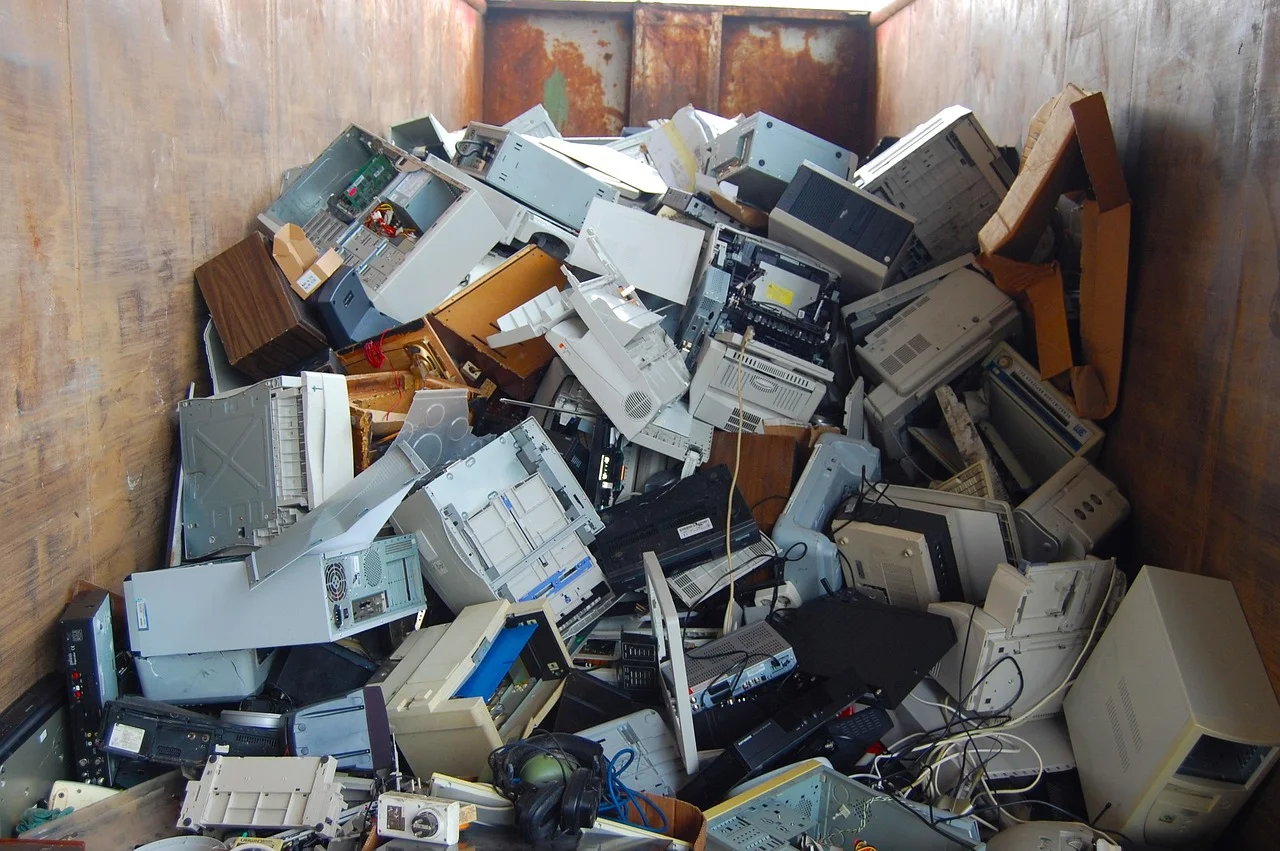
The amount of electronics manufactured globally is enormous, far beyond any practical way to quantify. Devices are produced and replaced at such a rate that the total number in circulation is almost meaningless to track. Furthermore, most electronics find their way into landfills after only a few years. Planned obsolescence, rapid technological evolution, and consumer-driven turnover ensure that a significant portion of materials is lost before it can be reused. This creates a systemic inefficiency in the supply of critical resources.
The net result is that massive amounts of minerals are required from countries like China. Control over upstream processing leaves Western supply chains perpetually reliant on these foreign sources, even if final assembly occurs domestically. Strategic vulnerability is built into the system because alternative supply cannot be scaled quickly.
These minerals do exist elsewhere, including in Australia and other regions. However, strict environmental regulations, permitting processes, and high development costs often make mining these deposits economically impractical. Developing new mines takes years or decades, leaving recycling as one of the few viable paths to security. Enforcing proper recycling measures could very well become standard practice as China reduces its dependence on foreign technology and increases self-sufficiency in materials. Recovering critical elements from e-waste would directly reduce reliance on external sources and strengthen supply chain resilience.
Such restrictions may also incentivize engineers and governments to adopt new design approaches. Devices could be designed for longer operational lifespans or modular upgrades, reducing turnover and the generation of e-waste. Policy frameworks or incentives could accelerate adoption of these practices.
Restricting supplies of rare minerals will naturally drive prices higher. Higher material costs, in turn, make recycling more economically attractive. Recovery programs become financially viable, encouraging industry to extract more value from existing products rather than relying on raw extraction abroad.
What Japan is doing is not surprising given the current trajectory of global supply chains. Nations are increasingly seeking ways to mitigate dependence on concentrated sources of critical materials. Given rising demand, geopolitical tensions, and resource scarcity, the situation is likely to get worse before it improves.
You may also like