
Facial Recognition: How Human Features Became the Heart of a Digital Revolution
WIN SOURCE recently explored the role of facial recognition as a defining force in today’s digital transformation. From real-time access control to privacy-conscious authentication, the article breaks down how facial recognition has evolved from a novelty to a widely adopted technology, supported by tools like 3D mapping, thermal imaging, and texture analysis.
We’re at a point where technology isn’t just evolving quickly. It’s quietly reshaping the way we live, work, and interact with the world around us. One example that stands out is facial recognition. This isn’t just about matching a face to a name. It’s about turning something deeply human into a digital identifier that machines can understand. From airports and retail stores to mobile phones and public services, facial recognition is finding its way into more systems every day. And it’s not just improving access. It’s changing expectations around security and identity.
What Is Facial Recognition?
Facial recognition systems don’t just take a picture and try to find a match. What they do is scan a person’s face, analyse specific details, and turn those features into a data set. This includes things like the distance between the eyes, the curve of the jaw, or the shape of the cheekbones. Each face becomes a kind of digital map. The system compares that map to a database of stored profiles to decide whether there’s a match. In a world where protecting identity is more important than ever, facial recognition offers a method that feels both personal and secure. It doesn’t require a password, a card, or even a fingerprint. Just your face, in front of a camera, and it works.
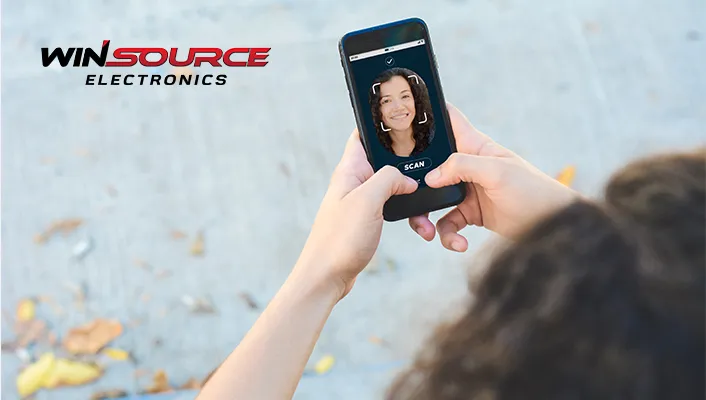
Key Features and Benefits
Facial recognition systems bring several strengths that explain their growing use:
- Speed - These systems work in real time. That means instant access, which is critical in places where time matters.
- Accuracy - High-performance systems can identify even the smallest differences between faces. In some cases, they can tell identical twins apart.
- Contactless operation - Since there’s no need to touch anything, this method supports hygiene standards. That makes it especially useful in healthcare or food production.
- Versatility - Whether it’s embedded into a smartphone or integrated into a security checkpoint, facial recognition adapts easily to different applications.
These strengths make it a strong choice for both public and private systems where identity matters.
Read the full, original blog here.
WIN SOURCE helps engineers and developers source the parts they need to build high-performance systems. With a wide selection of components, fast delivery, and global support, WIN SOURCE is a trusted name in electronic distribution.
Explore their catalogue at win-source.net
Related news
Keep up with the components and technology shaping electronics.
Join the club for member features, engineering discussion and easier access to the latest Component Club content.