
Kioxia Ships 512Gb TLC 9th Gen BiCS FLASH for AI and IoT
Kioxia begins sampling its 9th-gen 512Gb TLC BiCS FLASH™ memory, boosting performance and power efficiency for SSDs, AI, and industrial IoT.
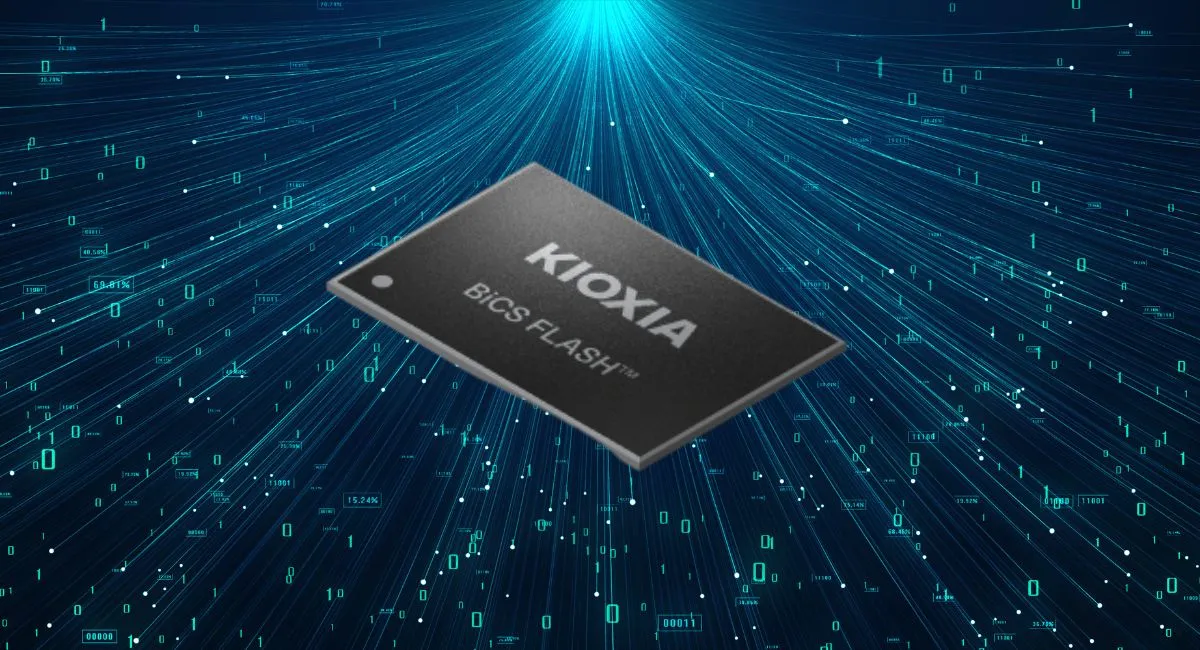
This generation introduces a blend of mature and advanced technologies. The devices combine Kioxia’s fifth-generation memory cell processes with modern CMOS logic using CBA (CMOS directly Bonded to Array) technology, maximising performance while keeping production costs in check. It’s a strategy that plays to Kioxia’s “dual-axis” roadmap: one focused on optimising cost-performance today, and the other pushing toward denser, higher-layer designs for tomorrow.
Performance Gains Across the Board
Compared to Kioxia’s earlier 512Gb TLC parts based on 6th-gen BiCS FLASH™, the new chips deliver meaningful upgrades:
- Write performance: up by 61%
- Read performance: up by 12%
- Write power efficiency: improved by 36%
- Read power efficiency: improved by 27%
- Bit density: increased by 8%
- Interface speed: supports Toggle DDR6.0 for up to 3.6Gb/s, with demo conditions showing speeds up to 4.8Gb/s
The 9th-gen devices use a 120-layer stack architecture, short of the extreme layer counts now seen in 10th-gen builds but offering a more cost-efficient approach for embedded systems, industrial IoT, automotive designs, and cloud storage use cases.
Designed for Flexibility, Built for Growth
Kioxia hasn’t locked in its full product line-up yet, but the company is positioning this generation to serve read-heavy environments and cost-sensitive applications alike.
“TLC’s advantages of higher storage density, cost effectiveness and performance offered through Kioxia's 9th generation BiCS FLASH™ 3D flash memory will be well-suited for IoT devices and embedded systems in the industrial and automotive sector where cost and capacity are most important,” said Axel Störmann, Vice President and CTO for Memory and SSD products at KIOXIA Europe.
The same attributes make it a natural fit for cloud workloads, AI inferencing, and edge computing, where affordable density and power efficiency are paramount.
Kioxia’s broader strategy is clear: use its existing technology base to deliver strong, scalable performance now, while continuing to develop high-layer-count products under its 10th-gen roadmap for future demand.
To learn more and read the original announcement, click here.
Related Reading
Want more content like this? Join the club for new product alerts, expert insights, and zero spam.
Related news
More from Kioxia
Keep up with the components and technology shaping electronics.
Join the club for member features, engineering discussion and easier access to the latest Component Club content.