
Littelfuse LF21173TMR and LF21177TMR Target Always-On Magnetic Sensing
Littelfuse introduces omnipolar magnetic switches designed for always-on, low-power sensing in compact systems.
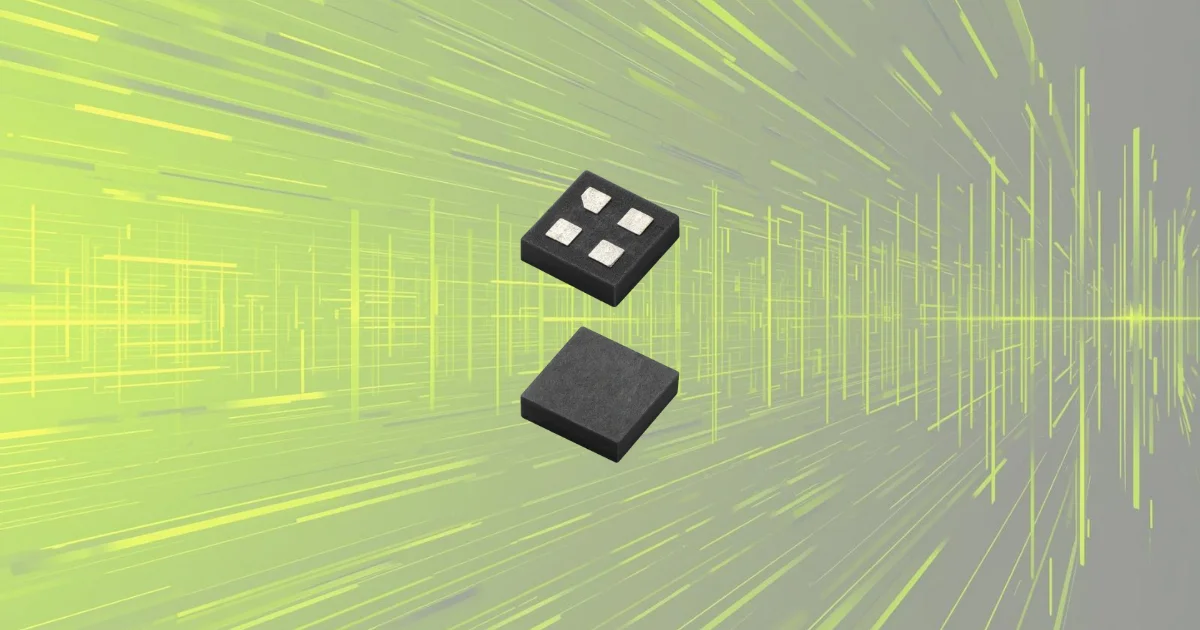
These devices are aimed at compact systems where magnetic sensing is continuous rather than occasional. Smart meters, electronic locks, medical devices, and portable consumer products all rely on sensors that remain active for long periods. The LF21173TMR and LF21177TMR are designed to fit into those roles without becoming a persistent drain on the power budget.
Always-On Sensors and the Cost of Background Current
In many designs, magnetic switches are specified late in the process, chosen to meet sensitivity and interface requirements while assuming their power impact is negligible. Over long deployment lifetimes, that assumption often proves optimistic. A sensor that draws a small but constant current can rival the consumption of the rest of the system when duty cycles are low.
The LF21173TMR and LF21177TMR are built to minimise that background cost. Rather than optimising for short active bursts, they are intended to operate efficiently while continuously biased. For engineers designing products that are expected to run for years on a single battery, that distinction matters more than peak switching performance.
Sensitivity as a Mechanical Design Lever
Magnetic sensitivity is not only about detection reliability. It directly affects how magnets are chosen, where they are placed, and how tightly mechanical tolerances must be controlled. Higher sensitivity allows the use of smaller magnets or greater air gaps, which can simplify enclosures and reduce mechanical stress over time.
These switches support multiple magnetic thresholds across a roughly 9 to 30 gauss range. In practice, that flexibility allows designers to trade magnet size, placement tolerance, and switching margin without redesigning the sensor interface. In applications such as meters or locks, where alignment can drift over the product lifetime, that margin becomes part of overall system reliability.
Omnipolar Behaviour Reduces Assembly Constraints
Both devices respond to either magnetic pole, removing the need to control magnet orientation during assembly. While this may appear to be a small detail, it has practical consequences in volume manufacturing.
By eliminating polarity constraints, omnipolar switches reduce the risk of assembly errors and simplify fixture design. Mechanical teams gain more freedom in magnet placement, and electrical teams avoid compensating for polarity mistakes elsewhere in the system. Over large production runs, those simplifications translate directly into yield and consistency.
Electrical Compatibility Across Low-Voltage Systems
The LF21173TMR and LF21177TMR operate from 1.8 V to 5.5 V, covering modern low-voltage microcontrollers as well as more traditional logic rails. An integrated CMOS-compatible output allows direct connection without additional interface components.
Fast response time ensures that low power operation does not come at the expense of system behaviour. In applications where magnetic transitions correspond to mechanical movement or user interaction, predictable timing remains important even when power consumption is minimized.
Packaging for Dense and Low-Profile Designs
Packaging choice reflects the target applications. The compact LGA4 format supports dense layouts and low-profile assemblies, allowing the sensor to be placed close to the magnet without consuming valuable board area or height.
For portable and wearable designs, where enclosure constraints often dictate component selection, this packaging helps keep sensing functionality from driving mechanical compromises.
Incremental Sensor Choices That Shape System Lifetime
The LF21173TMR and LF21177TMR reflect a broader pattern in low-power system design. Improvements that seem incremental at the component level often determine whether lifetime targets are met in the field. Lower background current, relaxed mechanical tolerances, and simplified assembly all contribute to that outcome.
For engineers working on products where sensors are always on and batteries are expected to last, magnetic switch selection is no longer a footnote. Devices like these are designed for that reality rather than idealised operating conditions.
Learn more and read the original announcement at www.littelfuse.com
Related news
More from Littelfuse
Keep up with the components and technology shaping electronics.
Join the club for member features, engineering discussion and easier access to the latest Component Club content.