
Microchip Power Module Lifts AI Server Density With Vertical Architecture
Microchip’s MCPF1525 power module provides 25A per device, stackable to 200A, with PMBus control, low noise performance and a vertical package that improves board density for AI, HPC and PCIe based compute systems.
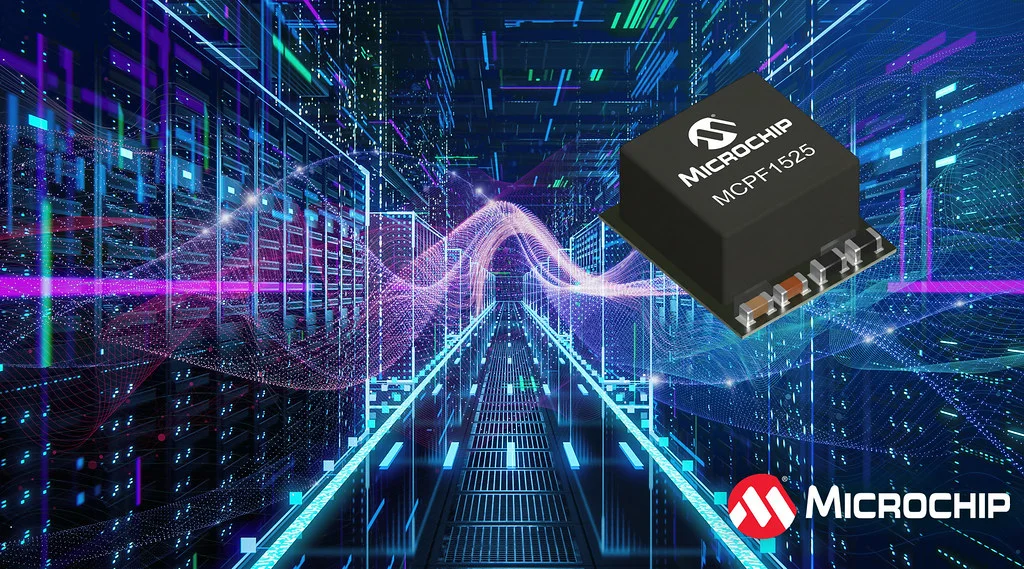
Stackable Power Behavior Aimed at PCIe and Compute Loads
The module delivers 25 amps from a 16 volt input in a buck configuration, and several units can be combined to reach up to 200 amps. That type of scalability matters when powering PCIe switches and high performance compute stages where the load can swing as data lanes and accelerators come online. Rather than spreading converters across the board, designers can build a tighter power island and keep the phase paths short. This reduces conduction losses and helps maintain stability when the system transitions between traffic patterns. The PMBus and I2C control interface also gives firmware a direct way to monitor or tune the rail, which is often required in platforms where power behavior feeds into telemetry or rack level orchestration.
Vertical Construction That Compresses Board Area
One detail that stands out is the physical format. The module uses a vertical arrangement that reduces the footprint compared to traditional low profile converters. In practice this can free considerable area around high speed devices that already occupy a large share of the PCB. For AI servers where routing density is high and thermal zones are carefully partitioned, recovering even a modest amount of board space around the power path helps the overall layout. The 6.8 by 7.65mm footprint, combined with the 3.82mm height, gives designers room to place timing critical components or memory devices closer to the processor or switch fabric. Over time, this type of packaging trend may become necessary as compute elements continue to draw more power without giving up routing real estate.
Diagnostic and Thermal Behavior Built for Heavy Workloads
The device includes fault reporting through PMBus for over temperature, over current and over voltage conditions. In data center hardware where uptime and predictability matter, having those diagnostics available without adding external sensors reduces the number of failure points in the design. The operating junction range from minus 40 to plus 125 degrees Celsius supports systems with significant thermal variation across the rack. The internal EEPROM that stores the power up configuration helps ensure the module behaves consistently across replacement units or production lots, which reduces the amount of per board calibration needed during manufacturing.
Noise Performance That Supports High-Speed Compute
The MCPF1525 uses a customized inductor to keep conducted and radiated noise low. This matters in AI and HPC platforms where high speed channels, memory buses and timing circuits sit close to the power delivery network. Unwanted noise can distort data transfers or trigger retries that waste power and time. A cleaner electrical environment reduces that risk and helps keep performance predictable when the compute load shifts. It also simplifies PCB stackup decisions since designers can rely less on shielding or separation layers around the power stage.
How This Module Fits Into Evolving AI System Design
As AI workloads continue to expand, more current must reach the compute and networking devices without compromising board space or thermal budgets. Integrated modules that stack cleanly and provide detailed telemetry are becoming central to that effort. For engineers, the takeaway is that the MCPF1525 aligns with the direction high performance systems are moving toward: higher current delivery in less space, with enough monitoring and configurability to support data center scale reliability.
Learn more and read the original announcement at www.microchip.com
Related news
More from Microchip
Keep up with the components and technology shaping electronics.
Join the club for member features, engineering discussion and easier access to the latest Component Club content.