
Littelfuse CPC1343G Relay Strengthens High-Isolation Switching in Compact Designs
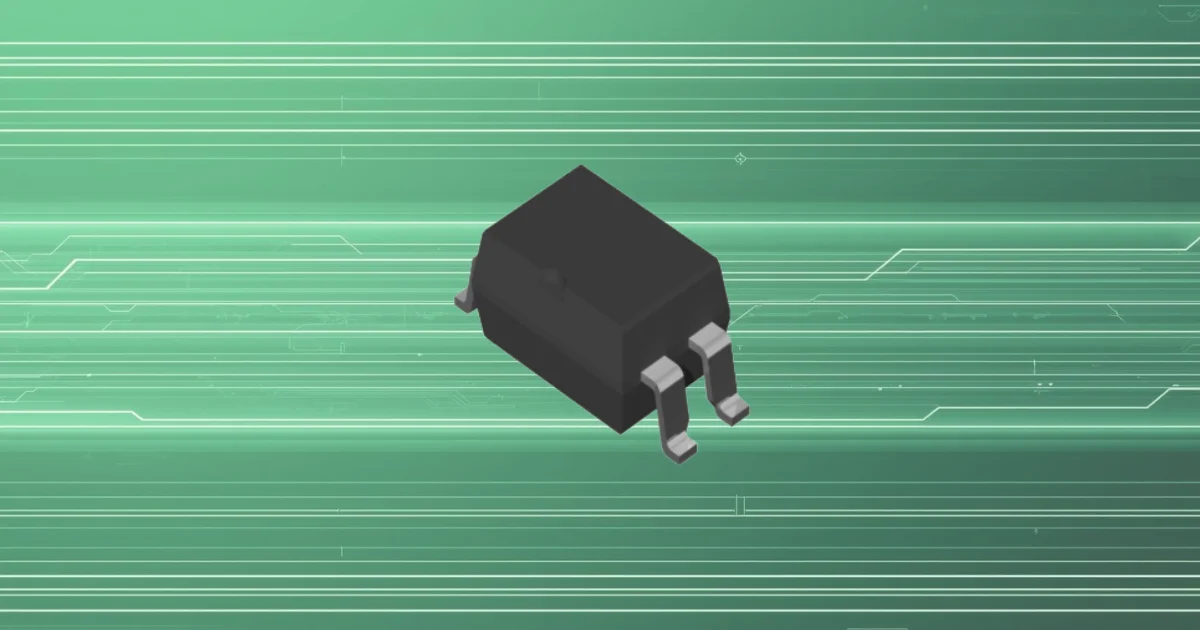
The Littelfuse CPC1343G OptoMOS solid state relay offers 900 mA load capability, reinforced 5000 VRMS isolation, fast switching, and extended temperature performance in compact DIP-4 and SMD packages for industrial and medical systems.
Switching Behavior Shaped for High-Reliability Loads
The CPC1343G uses an OptoMOS structure to provide a normally open path that can handle close to an ampere of continuous current despite living inside a small four-pin DIP outline. What becomes interesting is how the device controls its switching edge. The turn-on event sits around a few milliseconds while the turn-off happens faster, which helps avoid cross-coupling into nearby analog traces during release. Mechanical relays may achieve comparable behavior on paper but struggle once contact wear changes their timing profile. A solid state device maintains those characteristics throughout its life and avoids the intermittent failures that appear only after hundreds of hours of use.
Isolation Envelope That Supports Safety-Critical Systems
Isolation is often the first constraint when dealing with equipment that touches the outside world, especially medical devices or industrial measurement tools. The CPC1343G provides reinforced isolation at around five kilovolts RMS, which is enough to force a designer to reconsider the usual placement near sensitive circuits. In practice this means the relay can sit closer to mixed-signal domains without forcing long creepage paths across the board. High-isolation devices still need careful routing, but the reinforced barrier gives a small degree of flexibility when enclosures limit geometry. Designers working with patient-side interfaces will care about this because it helps keep the mechanical layout from dominating the electrical one.
Thermal and Drive Current Characteristics That Reduce System Overhead
The device operates cleanly from well below freezing to over one hundred degrees Celsius, which is a range many competing solid state relays do not attempt. That extended operating window matters in industrial cabinets where airflow is limited and the ambient often creeps above typical office temperatures. The LED input requires only a few milliamps of drive, which allows direct connection to logic without intermediate transistors or buffers. That small change becomes significant in sensing equipment or multiplexing chains where many channels need switching without a large current budget. Thermal performance is also helped by an on-resistance that stays under an ohm, keeping power dissipation manageable even when the relay sees higher load currents.
Package Options That Support Prototyping and Production
The CPC1343G arrives in a through-hole DIP package for early prototypes and small production runs, with surface mount versions available for automated builds. Tape-and-reel options simplify high-volume assembly where hundreds of devices may populate a single control board or test fixture. Although the package outline looks simple, the internal structure avoids the mechanical variability of electromechanical relays and keeps switching behavior consistent across manufacturing lots. When designers move from early boards to full production, these predictable characteristics reduce the chance of late-stage interactions between switching noise and analog paths.
Learn more and read the original announcement at www.littelfuse.com
Related news
More from Littelfuse
Keep up with the components and technology shaping electronics.
Join the club for member features, engineering discussion and easier access to the latest Component Club content.