
Würth Elektronik Launches WE-SFIA Flat-Wire Inductors
Würth Elektronik has launched the WE-SFIA SMT flat-wire inductor series for automotive DC/DC converters and filter chokes, with up to 158 A saturation current, 1.0 mΩ typical DCR, and operation from -40°C to +180°C.
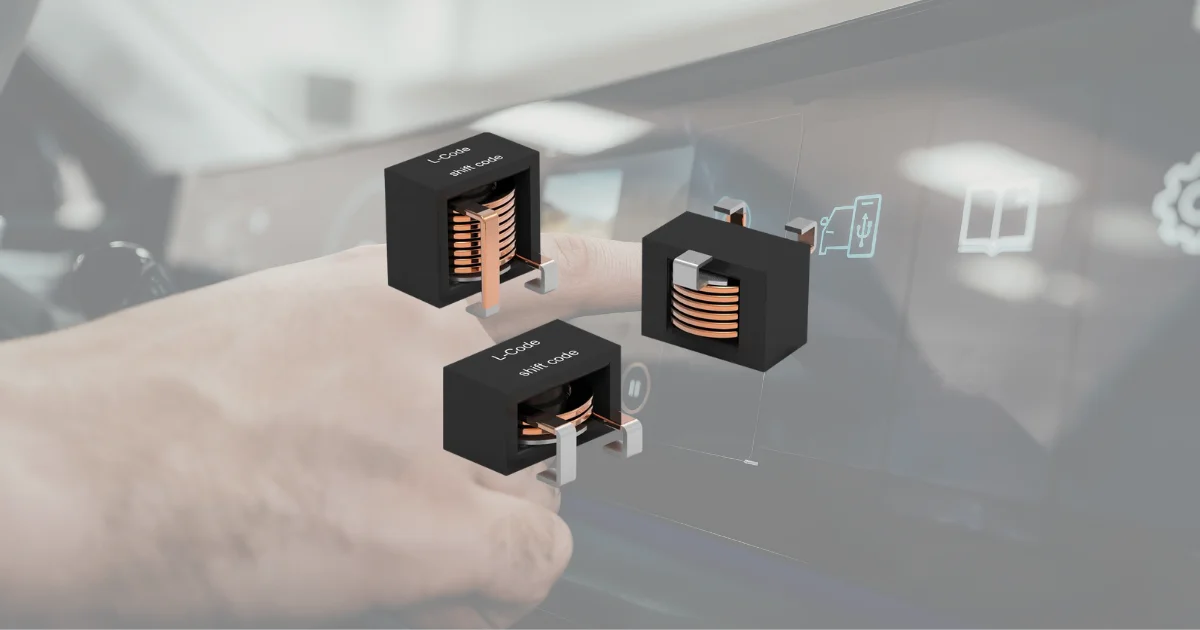
The WE-SFIA series is a family of flat-wire power inductors used in non-isolated switch-mode power supplies, buck and boost converters, output filters, battery management systems, motor electronics, infotainment hardware and automotive audio systems. The series covers inductance values from 0.33 µH to 4.7 µH and is rated for operation from -40°C to +180°C.
Automotive converter layouts can get crowded very quickly. The inductor may be sitting beside MOSFETs, capacitors, controllers, connectors, wiring, and local heat sources, so its losses are rarely treated in isolation. At higher current levels, DCR and saturation margin start to shape the layout, the thermal budget, and the converter’s response during load changes.
Flat-Wire Construction Cuts DCR In The Lower Values
The lower-inductance parts show the clearest reason for using flat wire in this range. Würth Elektronik lists the 0.33 µH, 0.47 µH, and 0.68 µH versions with 1.0 mΩ typical DC resistance and 1.1 mΩ maximum DC resistance. Each is rated at 49 A for a 40 K temperature rise. Those numbers are useful in compact power stages because inductor loss is not isolated from the rest of the board. Heat from the magnetic part adds to the thermal load around MOSFETs, controllers, capacitors, and nearby mechanical constraints. A lower DCR part gives designers more room before the inductor becomes one of the limiting components in the converter layout.
Flat wire also packs differently inside the component. It allows tighter, more even windings than round wire, while giving the conductor a larger cross-sectional area. Würth Elektronik also notes lower AC losses in high-frequency applications compared with comparable round-wire variants, including reduced skin-effect losses.
Saturation Current Reaches 158 A
The highest saturation current in the listed WE-SFIA range comes from the 0.33 µH part, which is specified at 158 A for ISAT,30%. The 0.47 µH version is rated at 124 A, the 0.68 µH version at 83 A, and the 1 µH version at 101 A. Higher inductance options continue through 1.5 µH, 2.2 µH, 3.6 µH, 4 µH, and 4.7 µH. That spread gives designers a useful range for lower-inductance, high-current converter stages rather than a single headline part. The 4.7 µH option, for example, is specified at 35 A saturation current with 2.8 mΩ typical DCR and a 22.5 A current rating for a 40 K temperature rise.
In a buck or boost converter, the inductor is tied closely to ripple current, transient response, and saturation margin. In multiphase designs, it also affects phase behavior and current sharing. These are ordinary converter design issues, but they become more visible in automotive systems where temperature, vibration, and space constraints tend to arrive together.
Built For Automotive Converter And Filter Stages
Würth Elektronik positions the WE-SFIA series for high-efficiency DC/DC converters in automotive systems, including single-phase and multiphase designs. The confirmed application list also includes non-isolated switch-mode power supplies, high-current output filters, battery management, motor electronics, audio, and infotainment systems. The 2010, 2013, and 2016 package sizes give engineers some mechanical flexibility without leaving the same product family. That is useful when the electrical target is similar across a design, but height, board area, or cooling conditions differ between rails.
The company also provides LTspice files for the WE-SFIA series. That gives designers a way to check behavior earlier in the power-stage design process, particularly around ripple current, transient response, and filtering before layout decisions become harder to change.
Würth Elektronik says the WE-SFIA inductors are available as catalog components, with customer-specific adaptations and additional inductance values available on request.
Learn more and read the original announcement at www.we-online.com
Technology Overview
The Würth Elektronik WE-SFIA series is a family of SMT flat-wire inductors for automotive DC/DC converters and filter choke applications. The range is available in 2010, 2013, and 2016 package sizes, with inductance values from 0.33 µH to 4.7 µH, saturation currents up to 158 A, typical DC resistance as low as 1.0 mΩ, and an operating temperature range from -40°C to +180°C. LTspice files are available for simulation support.
Frequently Asked Questions
What is the Würth Elektronik WE-SFIA series used for?
The WE-SFIA series is used in automotive DC/DC converters, non-isolated switch-mode power supplies, output filters, battery management systems, motor electronics, infotainment hardware, and automotive audio systems.
What is the lowest DCR in the WE-SFIA range?
The 0.33 µH, 0.47 µH, and 0.68 µH WE-SFIA parts are listed with 1.0 mΩ typical DC resistance and 1.1 mΩ maximum DC resistance.
What is the highest saturation current in the WE-SFIA series?
The 0.33 µH WE-SFIA part has the highest listed saturation current, specified at 158 A for ISAT,30%.
Related news
More from Würth Elektronik
Keep up with the components and technology shaping electronics.
Join the club for member features, engineering discussion and easier access to the latest Component Club content.