Rambus Introduces DDR5 Server RDIMM To Tackel AI Needs
As the memory needs for AI continue to increase, engineers are finding it hard to address the latest AI challenges. Now, Rambus has announced its latest DDR5 RDIMM memory that it says could help with an agentic future.
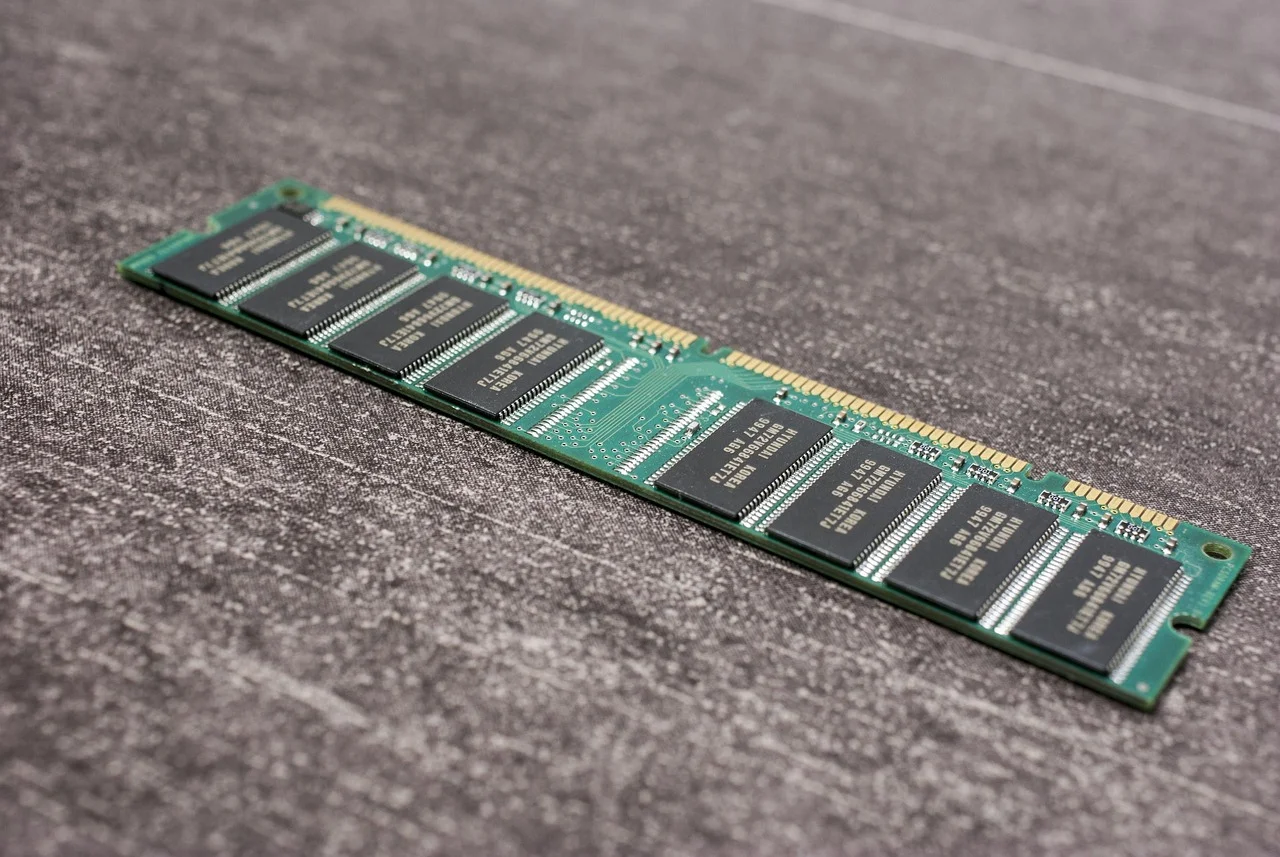
Rambus Releases New DDR5-9600 RDIMM
Recently, Rambus announced the release of its newest server memory solution, the DDR5-9600 Server RDIMM chipset. According to Rambus, the new chipset has been designed to provide greater memory bandwidth, support larger memory capacities, and improve power efficiency for AI, agentic AI, and high-performance computing (HPC) data centre workloads.
While traditional server workloads have often been limited by processor performance, the introduction of agentic AI and the increased use of AI in modern applications is now seeing the memory subsystem become a major bottleneck. Modern AI inference and autonomous agentic AI workloads are increasingly memory-bound, making memory performance a key factor in overall server throughput. Thus, RDIMMs need to become faster to account for the increasing number of neural networks being deployed, and it is this very need that Rambus hopes to address with its latest chipset.
The new chipset is based on Rambus' 6th Generation RCD06 Registering Clock Driver, allowing RDIMMs to operate at up to 9600 MT/s, a 20% increase over the previous generation, while maintaining signal integrity at these high data rates. The increase in memory speed helps CPUs communicate more efficiently with system memory while significantly increasing the available memory bandwidth.
{{TCC_CORE:embed_video[ID=SLJ75EnzpAA]}}
Furthermore, the new chipset can also help maximise the utilisation of high-core-count processors commonly found in servers, making it well suited for AI inference and high-performance computing applications. According to Rambus, the higher bandwidth and improved power efficiency can also help reduce the total cost of ownership for AI-focused data centres by allowing systems to process more data while consuming less energy per transfer.
The complete RDIMM chipset integrates all the components needed to support modern server memory modules, including the RCD06 Registering Clock Driver, the PMIC5030 power management IC, the SPD Hub, and a temperature sensor IC. Together, these devices provide clocking, power management, configuration, and health monitoring for the memory module.
The combination of these various ICs helps simplify the development and validation of RDIMMs while reducing the complexity involved with memory module design. According to Rambus, this allows memory manufacturers to accelerate time-to-market for future server memory products. The DDR5-9600 RDIMM chipset also forms part of Rambus' broader strategy to advance server memory interface technology for next-generation CPU platforms and AI infrastructure, where memory bandwidth is becoming just as important as processor performance.
Will This Help the Ongoing Memory Challenges?
While the new chipset solutions from Rambus will certainly help future memory needs in the AI market, they do not introduce any additional memory supply to the market. As such, for any engineer needing memory chips today, this announcement will likely fall on deaf ears.
However, as new technologies are introduced, they may encourage more memory manufacturers to enter the market, creating greater competition in the memory industry.
We are already seeing this with the emergence of Chinese memory manufacturers such as CXMT, which is now producing DDR4 and DDR5 memory chips. While these devices are still yet to see widespread adoption across the global server market, they demonstrate that new companies are actively working to increase memory production.
Sadly, for the time being, we will still have to wait for additional memory supply to reach the market. With AI infrastructure continuing to drive enormous demand for DRAM, memory prices are likely to remain under pressure over the next year or two, even as interface technologies such as Rambus' DDR5-9600 RDIMM chipset continue to improve overall server performance.

Related news
More from Robin Mitchell
Keep up with the components and technology shaping electronics.
Join the club for member features, engineering discussion and easier access to the latest Component Club content.