
TI Launches TMCS2100-Q1 Hall-Effect Current Sensor for EV Inverters
TI introduces the TMCS2100-Q1 multiaxial coreless Hall-effect current sensor for HEV and EV traction inverters, with 20x greater accuracy than single-axis alternatives and no required busbar modifications.
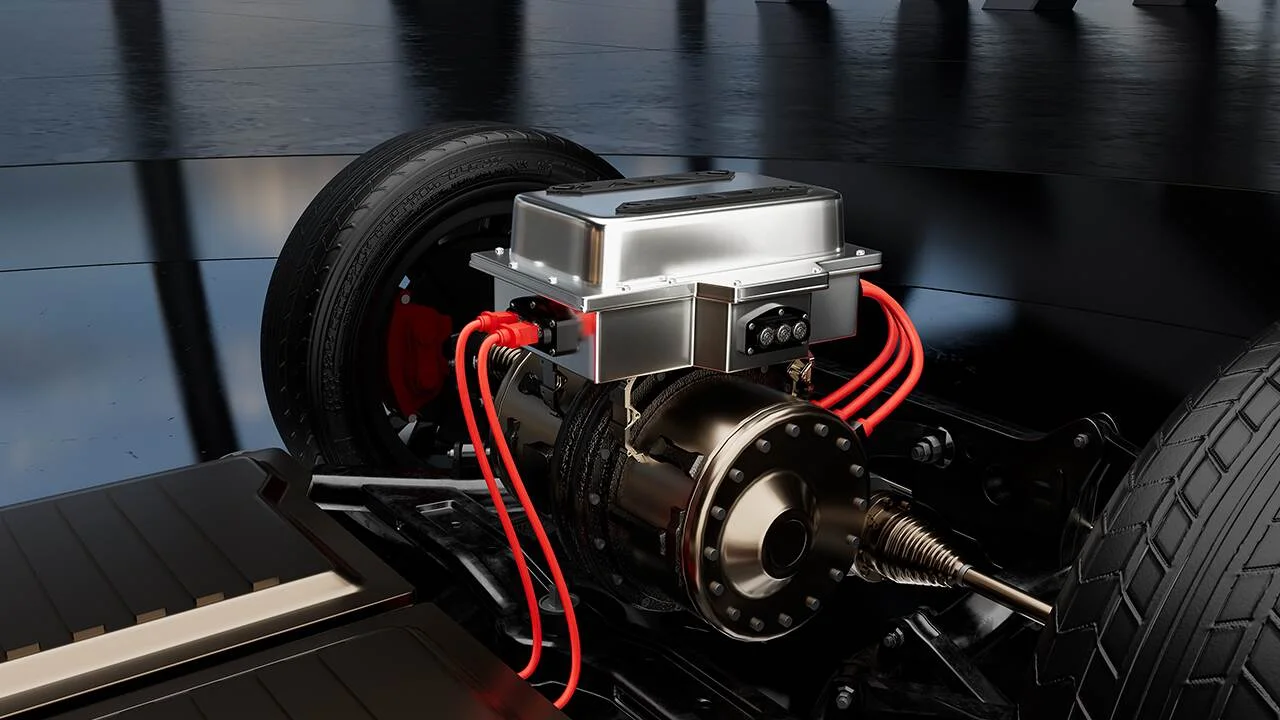
The sensor achieves displacement error of less than 1% at 0.4 mm movement and as low as 0.25% at 0.1 mm. It is designed for current measurement at the busbar connecting the traction inverter to the motor, where vibration can cause movement between the sensor and conductor.
Multiaxial Sensing Addresses Displacement Error
Traditional current measurement approaches can use a magnetic core to provide accurate measurements, but the core adds size and weight to the system. Coreless sensors remove the magnetic core, although movement between the sensor and conductor can introduce displacement error.
The TMCS2100-Q1 measures magnetic fields in both horizontal and vertical axes at the same time. Combined with TI's proprietary algorithm, the multiaxial measurement is designed to reduce vibration-induced error and the influence of magnetic crosstalk on the current measurement.
Accurate current measurement is used by the traction inverter's torque control loop. TI developed the TMCS2100-Q1 for HEV and EV inverter designs where movement and vibration around the busbar can affect measurements from single-axis coreless sensors.
Coreless Measurement Without Busbar Modifications
Hall-effect current sensors detect the magnetic field produced by electrical current flowing through a busbar. TI notes that existing differential coreless sensors can require modifications to the busbar, including notches, slices or holes.
The TMCS2100-Q1 uses a multisensor architecture that does not require these modifications. Sensors can instead be positioned relative to the busbar, giving designers more flexibility to adapt the current sensing arrangement to different mechanical configurations and available board space.
Production quantities of the TMCS2100-Q1 are available upon request from TI.
Learn more and read the original announcement at ti.com.
Technology Overview
The TMCS2100-Q1 is a multiaxial coreless Hall-effect current sensor developed for HEV and EV traction inverters. It measures magnetic fields in horizontal and vertical directions to reduce errors caused by movement between the sensor and busbar.
TI specifies displacement error of less than 1% at 0.4 mm movement and as low as 0.25% at 0.1 mm, and says the architecture is 20 times more accurate than single-axis coreless alternatives.
FAQs
What is the TI TMCS2100-Q1?
The TMCS2100-Q1 is a multiaxial coreless Hall-effect current sensor designed for current measurement in HEV and EV traction inverters.
How does the TMCS2100-Q1 differ from single-axis Hall-effect sensors?
The TMCS2100-Q1 measures magnetic fields in both horizontal and vertical directions. TI uses these measurements with a proprietary algorithm to reduce displacement errors caused by movement between the sensor and busbar.
Does the TMCS2100-Q1 require modifications to the busbar?
TI says the multisensor architecture can be positioned relative to the busbar without the notches, slices or holes that can be required by existing differential coreless sensing approaches.
Related news
More from Texas Instruments
Keep up with the components and technology shaping electronics.
Join the club for member features, engineering discussion and easier access to the latest Component Club content.