TE Connectivity Unveils Inside Device Connectivity Solutions for Automotive Modules
TE Connectivity’s in-device connectivity portfolio brings board-to-board, wire-to-board, flex and wire connectors optimized for automotive ECUs and SDR architectures.
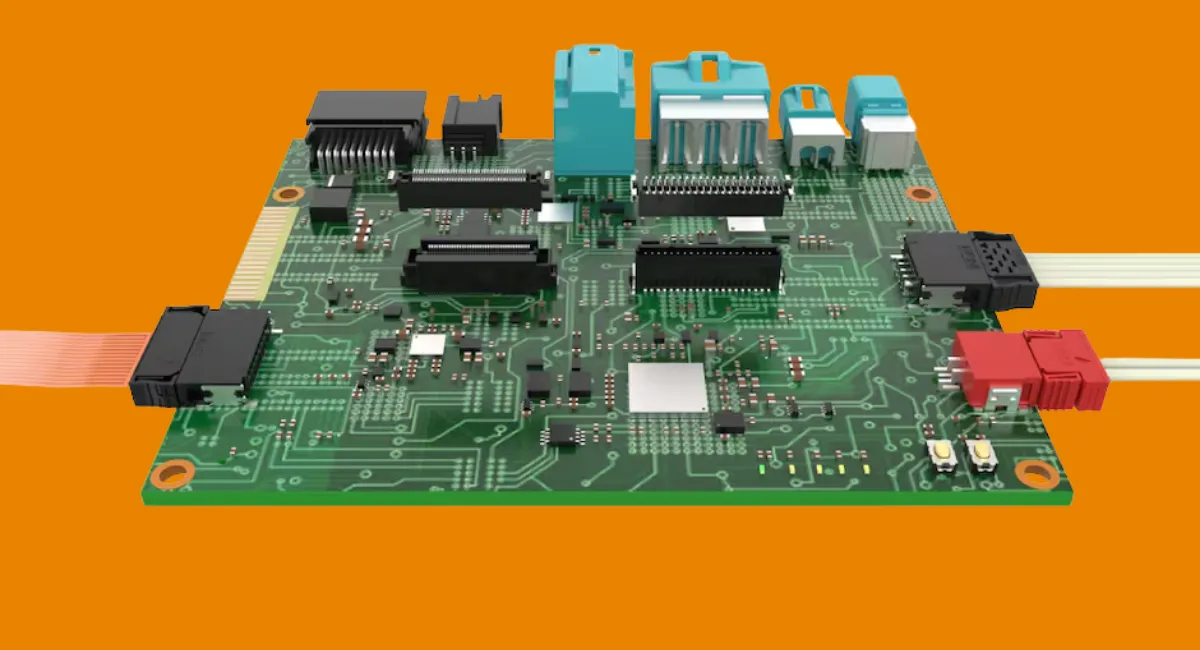
TE’s In-Device Connectivity Portfolio
TE Connectivity’s new inside device connectivity line addresses those exact pressures. The portfolio offers solutions across board-to-board, wire-to-board, flex-to-board, and wire-to-wire form factors. These are built for signal integrity, mechanical tolerance, and compact packaging inside automotive electronic modules.
From TE’s materials: the portfolio supports pitches from 0.4 mm up to 10.16 mm and pin counts as high as 180. Wire-to-board variants in the range handle currents up to 45 A, while board-to-board paths go up to 18 A. TE also highlights that its internal connectors are designed for harsh environmental conditions: vibration, heat, humidity, and EMI exposure.
The TE in-device page also gives use-case context. These connectors are used in EV battery and battery management, onboard chargers, power conversion modules, ADAS sensors like radar and LiDAR, and high-performance compute modules. Because these connectors lie inside modules, they reduce footprint, wire lengths, and assembly complexity.
Why This Matters
If you are designing zonal ECUs, module electronics, or embedded systems, this portfolio is relevant. You’ll look at trade-offs among pitch, pin count, current capability, and EMI performance. Having connector choices with high current density and mechanical robustness in tight module spaces helps reduce wiring cost and thermal stress.
Because these connectors are internal (not external vehicle harness), they act as the final link inside modules. The better their mechanical and EMI design, the fewer signal losses or failures downstream.
Learn more and read the original article on www.te.com
Related news
More from TE Connectivity
Keep up with the components and technology shaping electronics.
Join the club for member features, engineering discussion and easier access to the latest Component Club content.