
Infineon OptiMOS TDM22545T Brings TLVR Power Modules to AI Data Centres
Infineon introduces the OptiMOS TDM22545T, a TLVR-based dual-phase module designed to boost efficiency and transient response in AI servers.
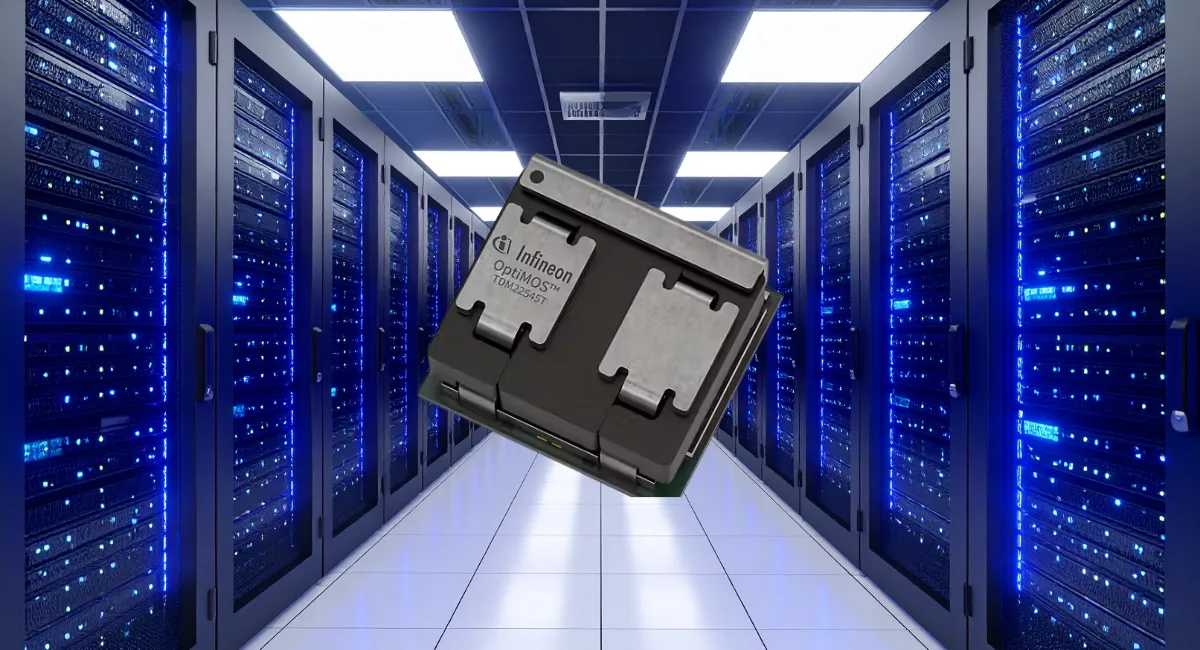
Infineon is aiming to tackle this problem with its latest OptiMOS module, the TDM22545T, which it describes as the industry’s first high-density trans-inductance voltage regulator (TLVR) power module built specifically for AI data centres.
TLVR as a New Architecture
TLVR differs from conventional approaches by using a coupled inductor structure that reduces the number of output capacitors. The design delivers fast transient response and higher density while cutting board space and bill-of-material cost. For AI workloads, where current swings can change in microseconds, this ability to stabilise voltage quickly is crucial.
Inside the OptiMOS TDM22545T
The new module integrates Infineon’s trench-based OptiMOS power stages with a proprietary TLVR inductor, packaged into a 9 × 10 × 5 mm³ dual-phase device. It can supply up to 140 A across both phases, and its compact footprint enables higher current delivery within the same board area.
The TLVR design improves electrical and thermal efficiency, while the reduced capacitor count lowers system cost. For operators, this translates into higher throughput and fewer design compromises when powering large AI accelerators.
Vertical Power Delivery and System Impact
The TDM22545T is also compatible with vertical power delivery, where regulators are mounted directly beneath the processor package. This arrangement can reduce power delivery network losses by as much as 50 percent compared with traditional layouts. Paired with Infineon’s XDP controllers, it forms part of a wider platform aimed at optimising power delivery across next-generation data centre systems.
Why It Matters
Data centre energy use is often measured at the megawatt level, but the fine details of voltage regulation are where significant savings can be made. Infineon’s adoption of TLVR in a production-ready module provides engineers with a new tool for balancing density, efficiency, and transient performance in AI servers. It shows how innovation in power electronics is becoming just as critical to green computing as advances in processors and cooling.
Learn more and read the original article on www.infineon.com
Related news
More from Infineon
Keep up with the components and technology shaping electronics.
Join the club for member features, engineering discussion and easier access to the latest Component Club content.